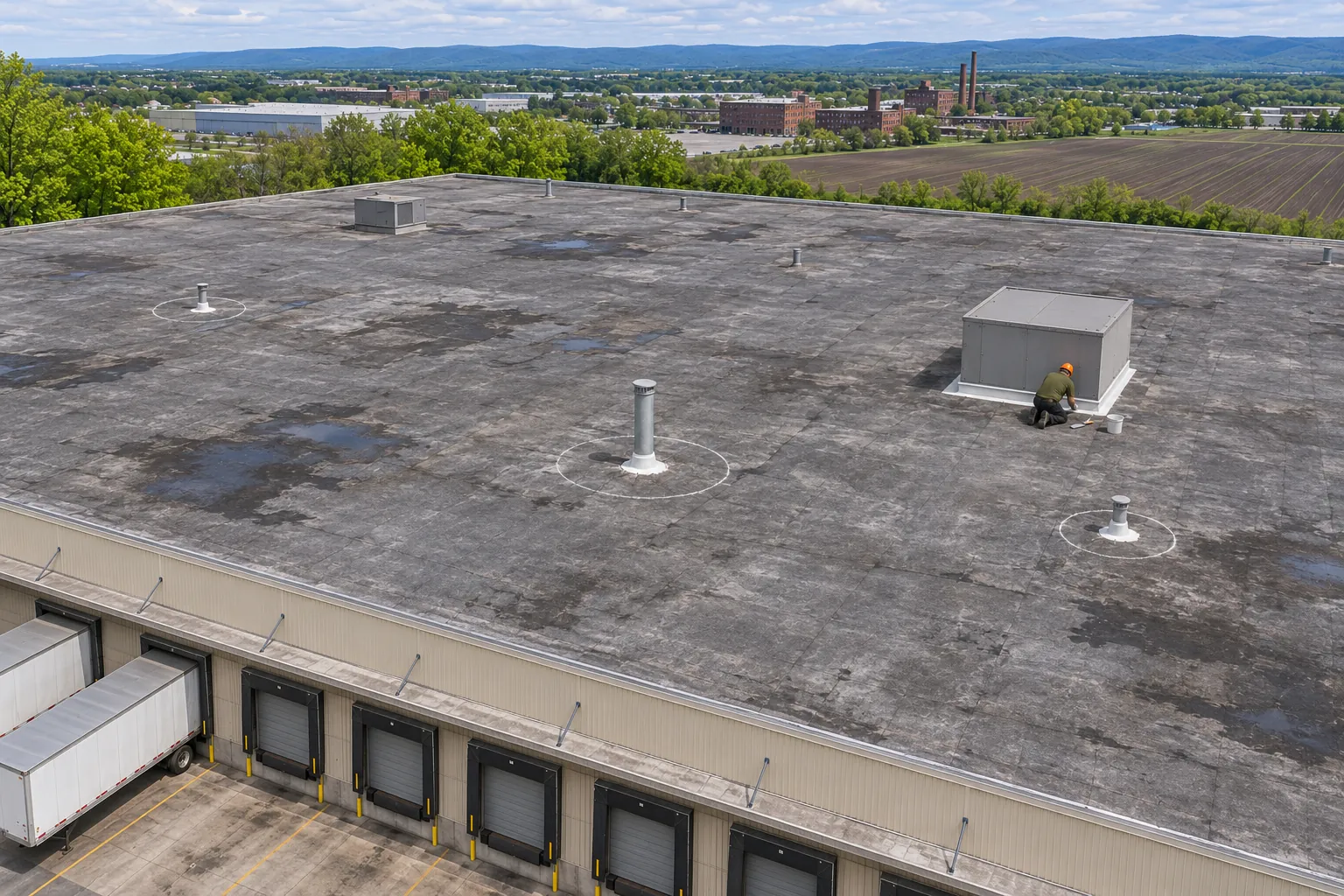
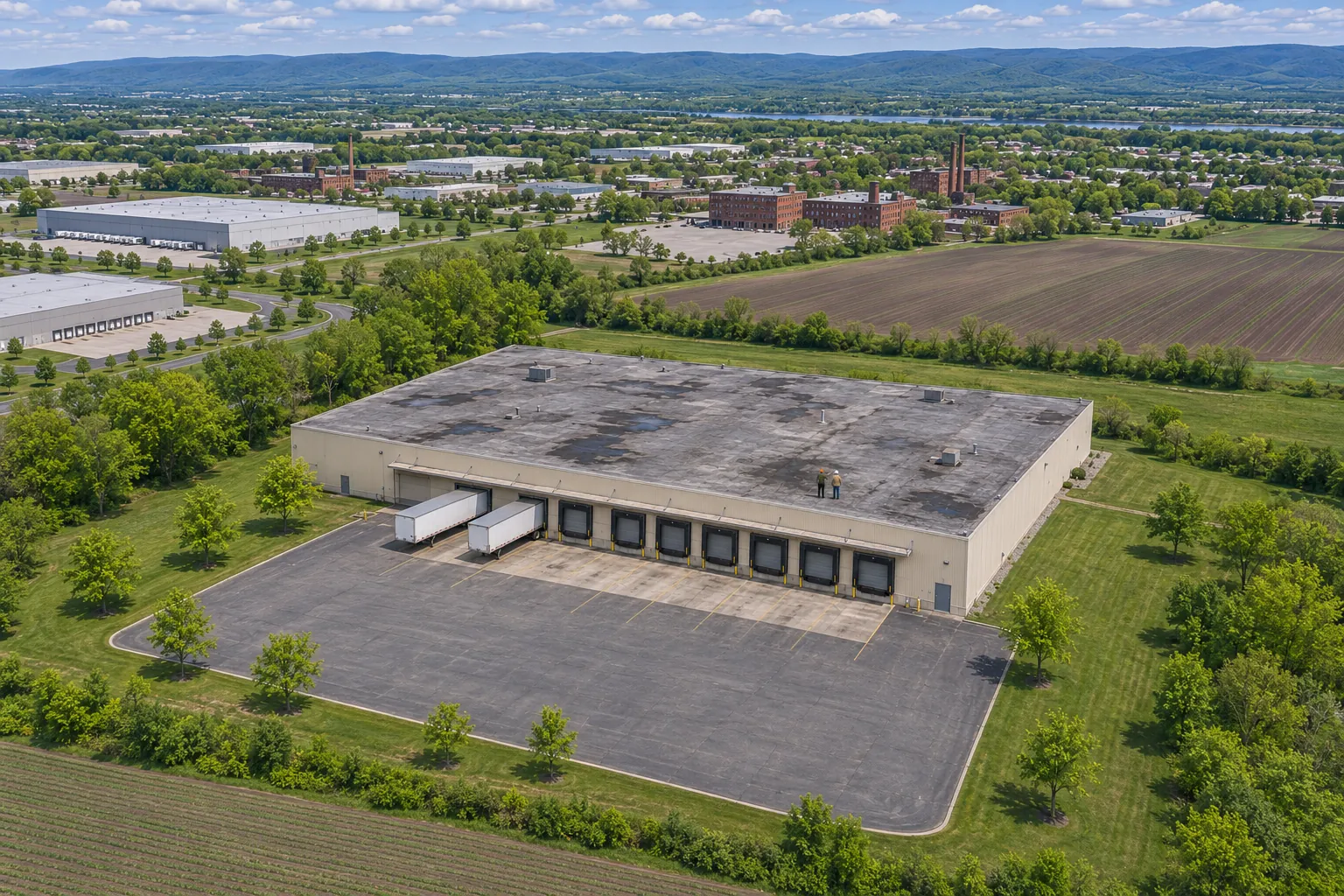
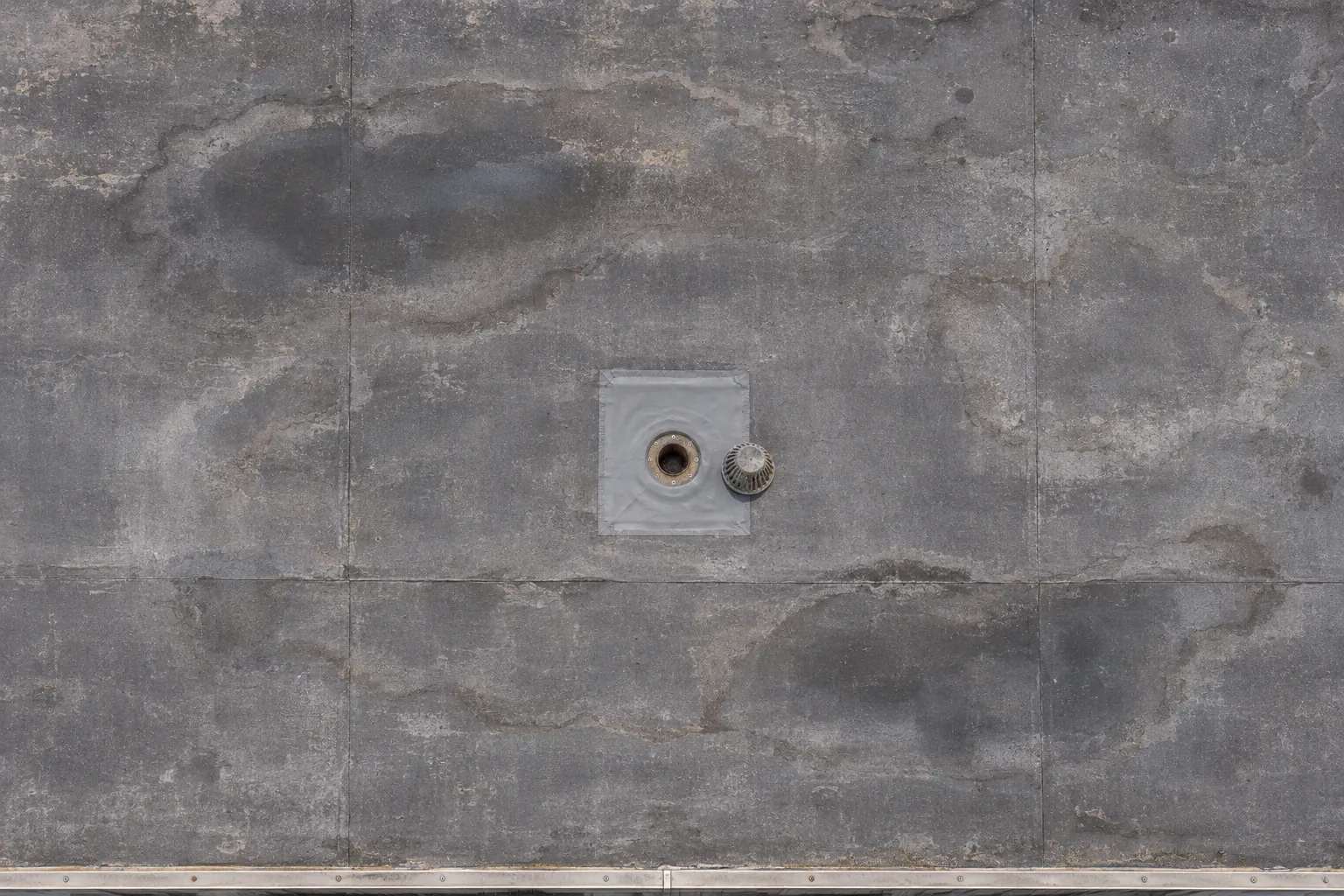
Membrane roofs over storage floors, where split laps, blisters, and low bays between drains need patches tied into dry roofing.
- Low bays between drains
- Laps above dock doors
- Wet board in one area
We provide Carlisle commercial roof repair for warehouses and distribution buildings, tracing each leak to the roof bay above it before any seam is cut.

Carlisle commercial roof repair on large warehouses starts with one question: where is the water really entering, now that the floor below has changed?
Storage racks get moved, aisles get renumbered, and the spot where staff notice a drip shifts with them. An old report that says "aisle 14" can send an inspection to the wrong part of a roof that covers several acres.
We match the current rack layout to column lines and the roof grid, then compare it with earlier reports. The defect overhead may be the same one, but the search starts from where water lands today.
Large membrane roofs over storage floors give a few clear warnings. These are the ones Carlisle facility staff report most.
A leak that seems to jump aisles after a layout change usually comes from one roof opening, now landing on different shelving.
Long roofs with widely spaced drains hold water in low bays, and seams there stay wet after every storm.
Wind lifting over dock doors works the membrane along the roof edge, opening laps that sit right above staging areas.
Stock under an active drip needs an emergency commercial roof repair to dry in the opening while the full source is traced.
Insulation that crushes underfoot in one bay shows how far water has spread beneath the membrane there.
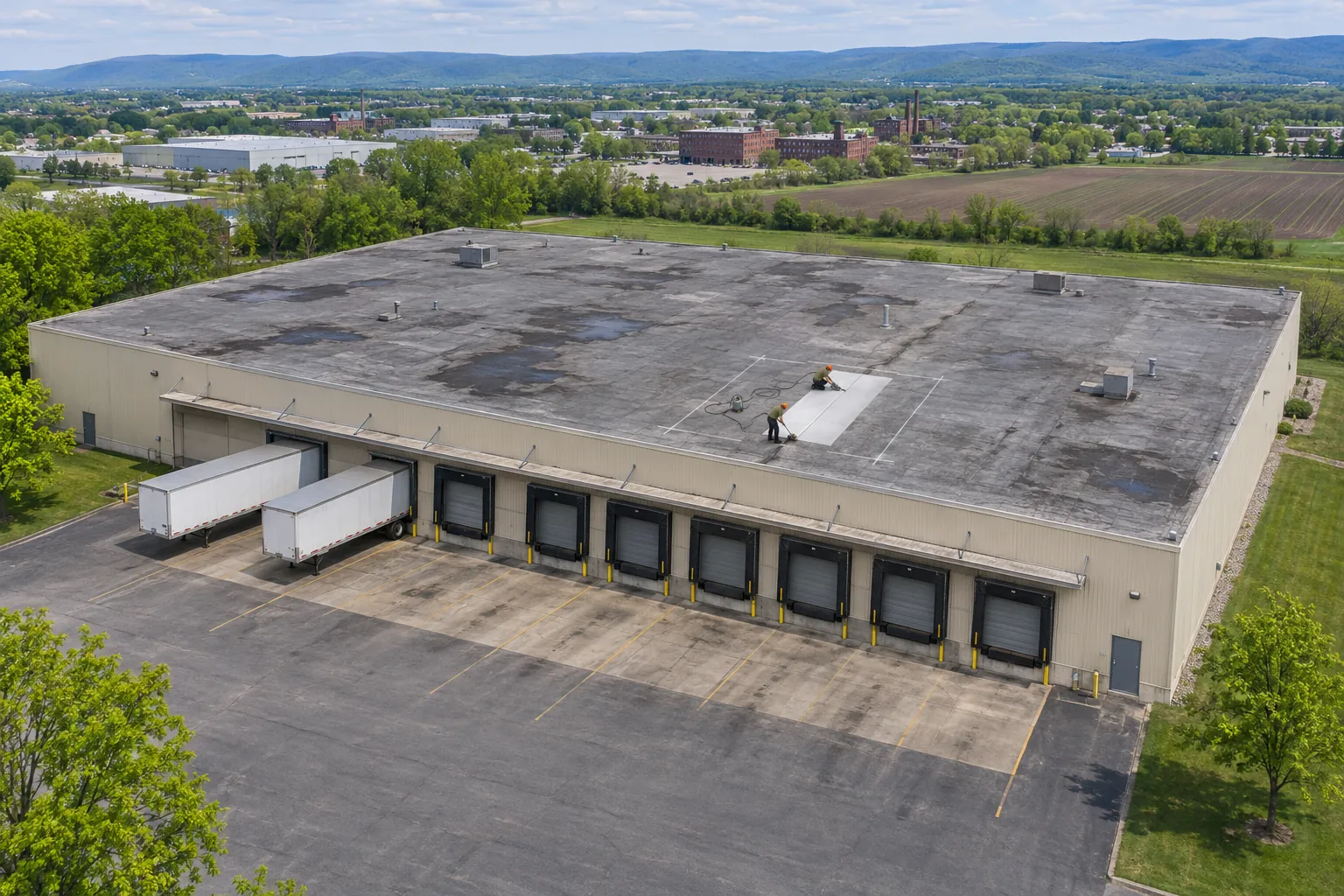
Repairing one mapped section at a time fits how distribution buildings operate.
Work above one bay leaves the rest of the floor and its racks in use while the roof section is repaired.
Replacing soaked insulation inside the bay stops the hidden spread under the membrane that sends leaks sideways.
Column-line notes and photos let future leak reports be matched to the roof in minutes.
Paying for the failed bay and its seams leaves dry sections of the roof in service for years.
Each repair type below shows where it fits on Carlisle warehouse and commercial roofs.
Membrane roofs over storage floors, where split laps, blisters, and low bays between drains need patches tied into dry roofing.
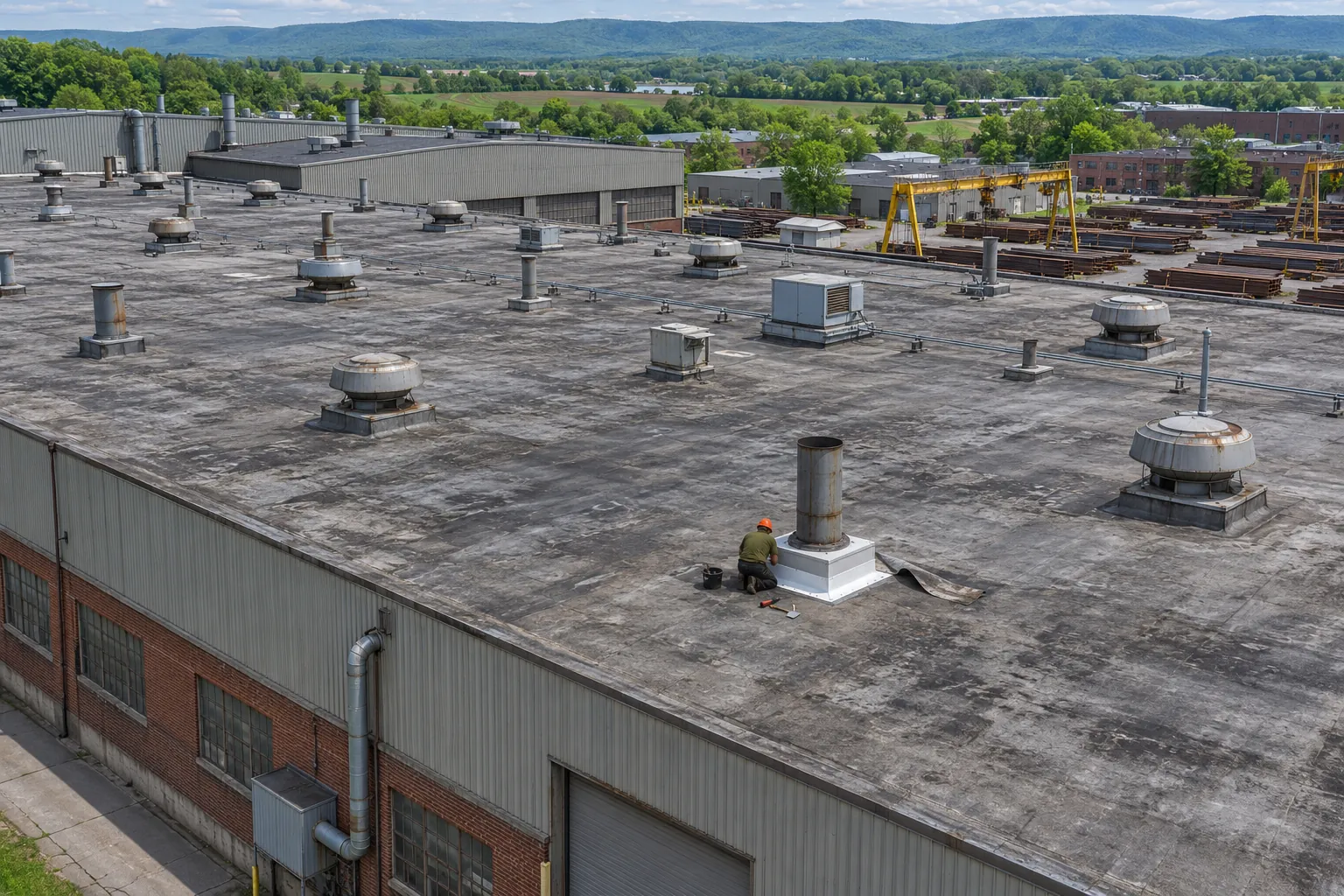
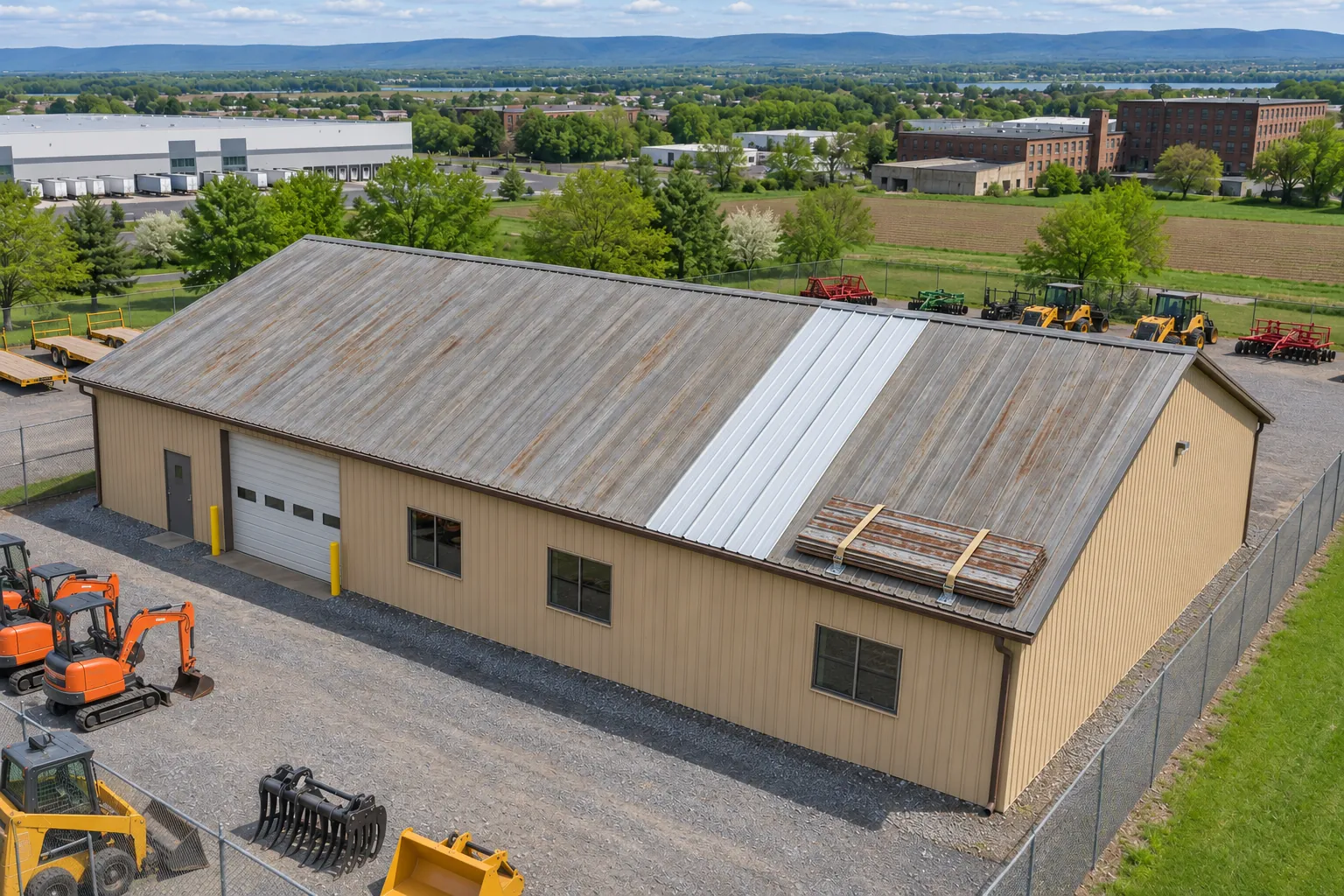
Metal outbuildings and truck shops beside warehouses, with loose screws, opened laps, and rusted panel ends.
Drips that move with rack layouts get traced to column lines and roof bays before any opening is cut.
Processing and cold storage roofs with fans and curbs, repaired around shifts and stored goods.

Send the address and the current rack layout if you have it. We match it to the roof above and price the repair after tracing.
Four steps keep warehouse repairs tied to the right part of a large roof.
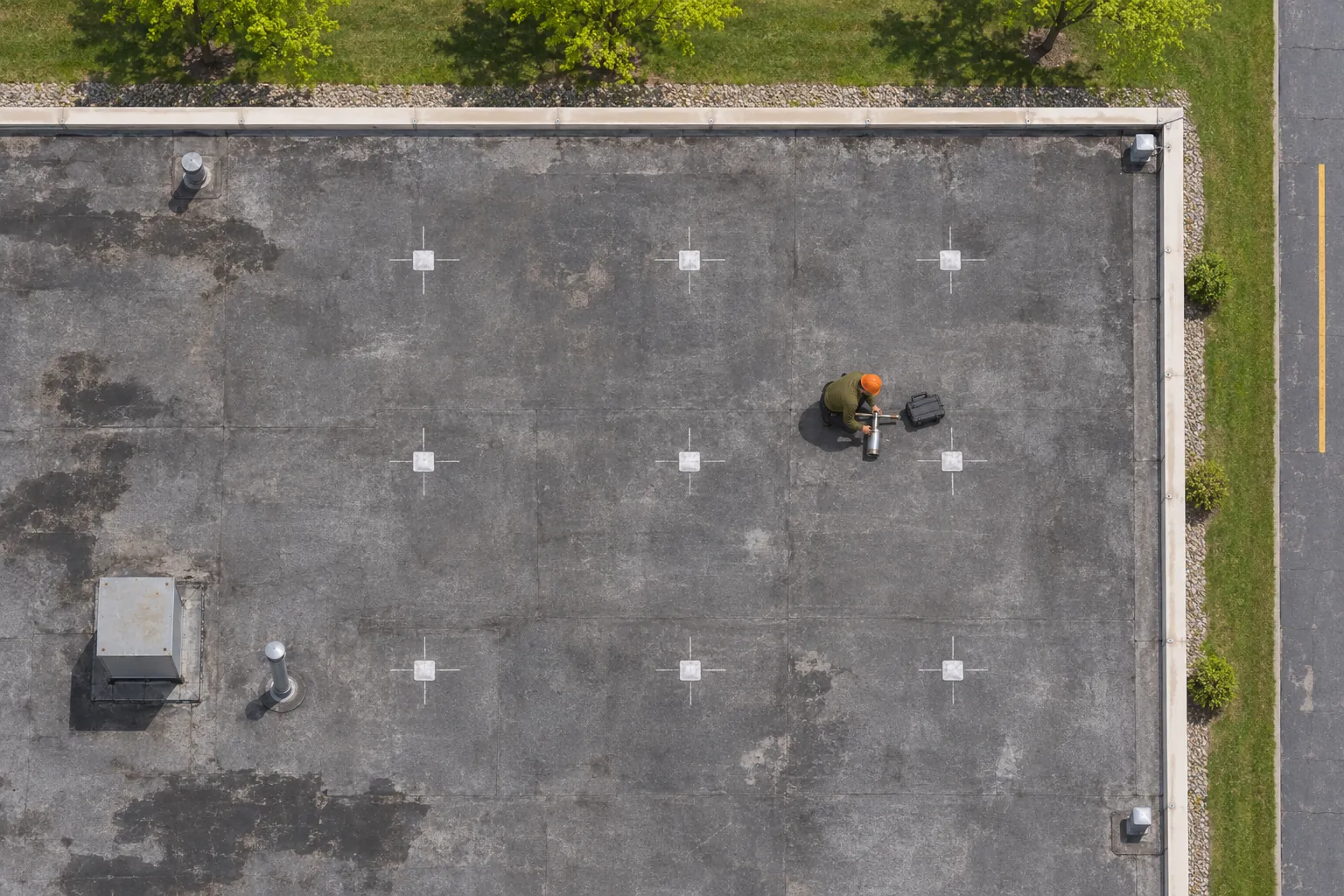
We locate each drip against column lines and the current rack layout, then mark the matching roof bay.
Seams, laps, curbs, and the drains serving that bay are checked, along with the bays on each side.
Wet insulation inside the bay is replaced, and new membrane is tied into dry roofing past every edge.
Photos and column references go into the report, so the next leak can be matched to the roof quickly.
We repair commercial roofs in the towns below as well. Elsewhere, call us or send us a message if your building sits between these towns.
Home base: office roofs, brick blocks, and logistics warehouses.
Office roofs with split edge flashing and lifting coping.
Drains leaking on warehouse roofs after nearby work.
Open offices and shops with clear leak reports.
Older roofs with unused curbs to remove and close.
Answers for Carlisle warehouse owners and facility managers.
Often, yes. When racks move, the spot where water is noticed moves too, and new shelving can block the old evidence. We compare the current layout with earlier reports and roof locations. The roof defect is frequently the same one, but an old aisle reference can send the inspection to the wrong bay.
Usually. Large roofs are repaired bay by bay, with each section tied into dry roofing at its edges. Shared drains are checked for the bays on each side, because one clogged outlet can push water into a neighboring seam.
The field membrane, seams, edges, curbs, drains, and the deck where it can be reached, plus core cuts at suspect spots. On warehouses we also log column lines and rack positions, so findings line up with what staff see on the floor.
Spring and fall walks catch most problems, plus a check after heavy storms. Clearing drains and noting split laps before winter keeps meltwater from finding the same weak seams each year.
Water landing on stock, wiring, or equipment. A temporary dry-in over the opening protects the floor while the source is traced and the permanent repair is planned. Each temporary fix is listed in the findings so it gets replaced.
Yes. Roof work is staged by bay, and materials are lifted where they stay clear of dock traffic. We set work hours with the building manager before the visit.
Send the warehouse address and where water lands now. We match it to the roof and price the repair after tracing.