Fastener And Seam Repair
- Leak Source
- Screw holes and laps
- Panel Metal
- Surface rust only
- Fasteners
- Backed out or stripped
- Purlins
- Solid
- Usual Fix
- Reset, upsize, reseal laps
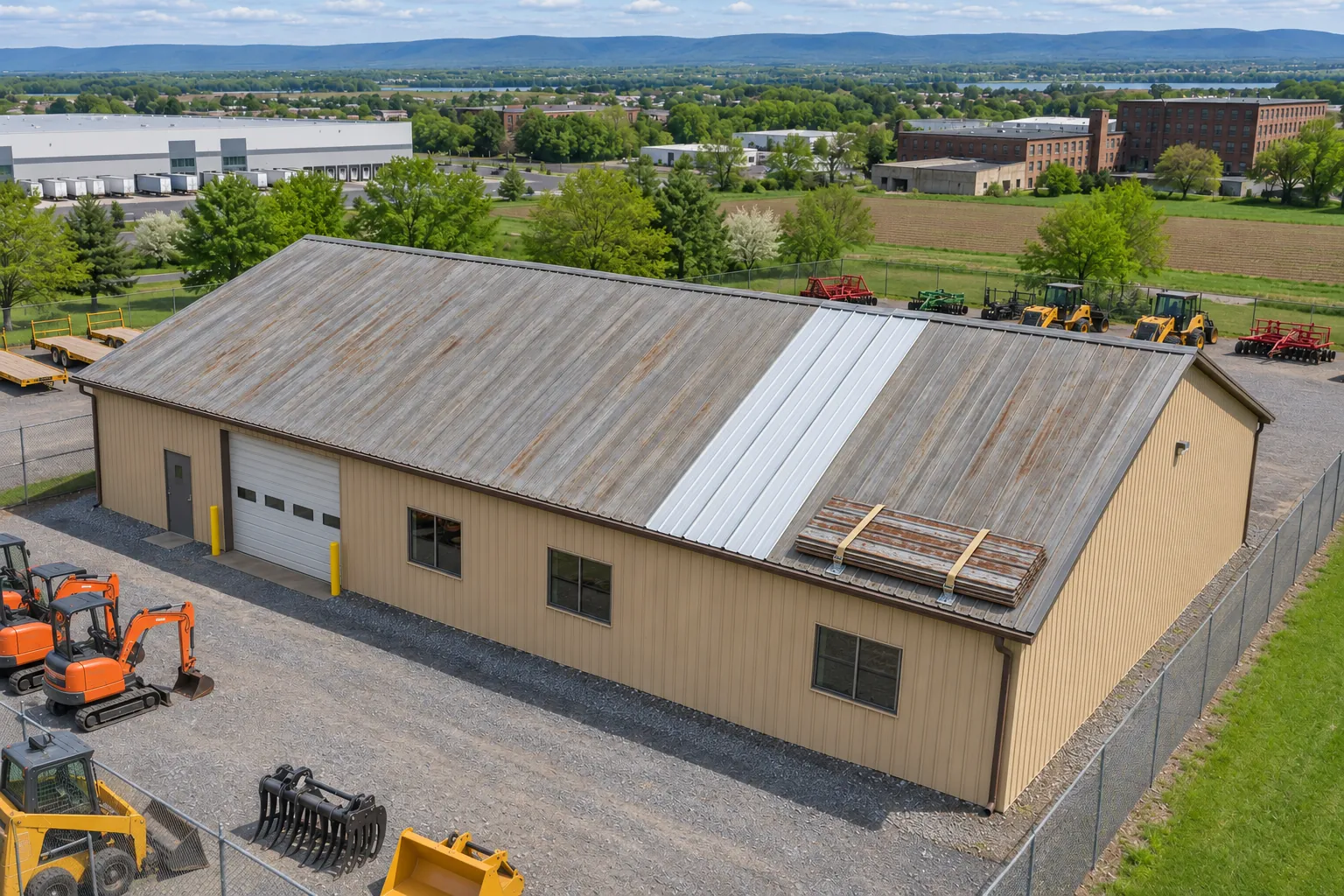
As a Harrisburg commercial metal roof repair contractor, we reset fasteners, rebuild laps and seams, replace rusted panels, and reflash pipes on metal buildings.
A Harrisburg commercial metal roof repair starts with how the panels are attached. These columns compare a fastener and seam repair, a panel swap, and a re-roof.
Metal roofs on shops and storage buildings show trouble at the same few details. Here is what each sign means.
Sun and cold harden the rubber washer under each screw head, and once it splits, water follows the screw shank inside.
Orange staining at the bottom laps and eave ends marks where water sits longest and where steel thins first.
Panels that shift with expansion pull their side laps apart, leaving a gap that a sealant bead holds for only a season.
Rubber boots around vents and stacks crack or slide as panels move, and drips start right below the penetration.
A drip landing on machinery or wiring under a metal roof needs the panel above dried in before any slower repair.
Each method fixes a specific way metal roofs let water in. Most repairs combine two or three of them.
Stripped holes get an oversized fastener with a new washer, and a screw that missed the purlin is moved so it bites solid metal again.
Rusted panels come out and are replaced with the same rib profile, lapped and fastened into the panels beside them so water keeps running downslope.
Opened laps are realigned, refastened, and sealed with tape or butyl inside the joint, which lets the panels move without tearing the seal.
Vent boots, curbs, and skylight frames get new flashing sized to the panel profile, with closures that fill the ribs around each opening.
Repairs that fix how panels attach keep the whole metal roof working longer.
Repairing the attachment at each leaking screw ends the cycle of sealant dabs that open again every winter.
Stopping water at the laps slows rust on the panels and purlins, the most expensive part of a metal roof.
Closing gaps at laps and ridge closures keeps drafts and condensation drips off the floor below.
Shops and storage buildings keep tools, feed, and stock dry once the panel above them sheds water again.
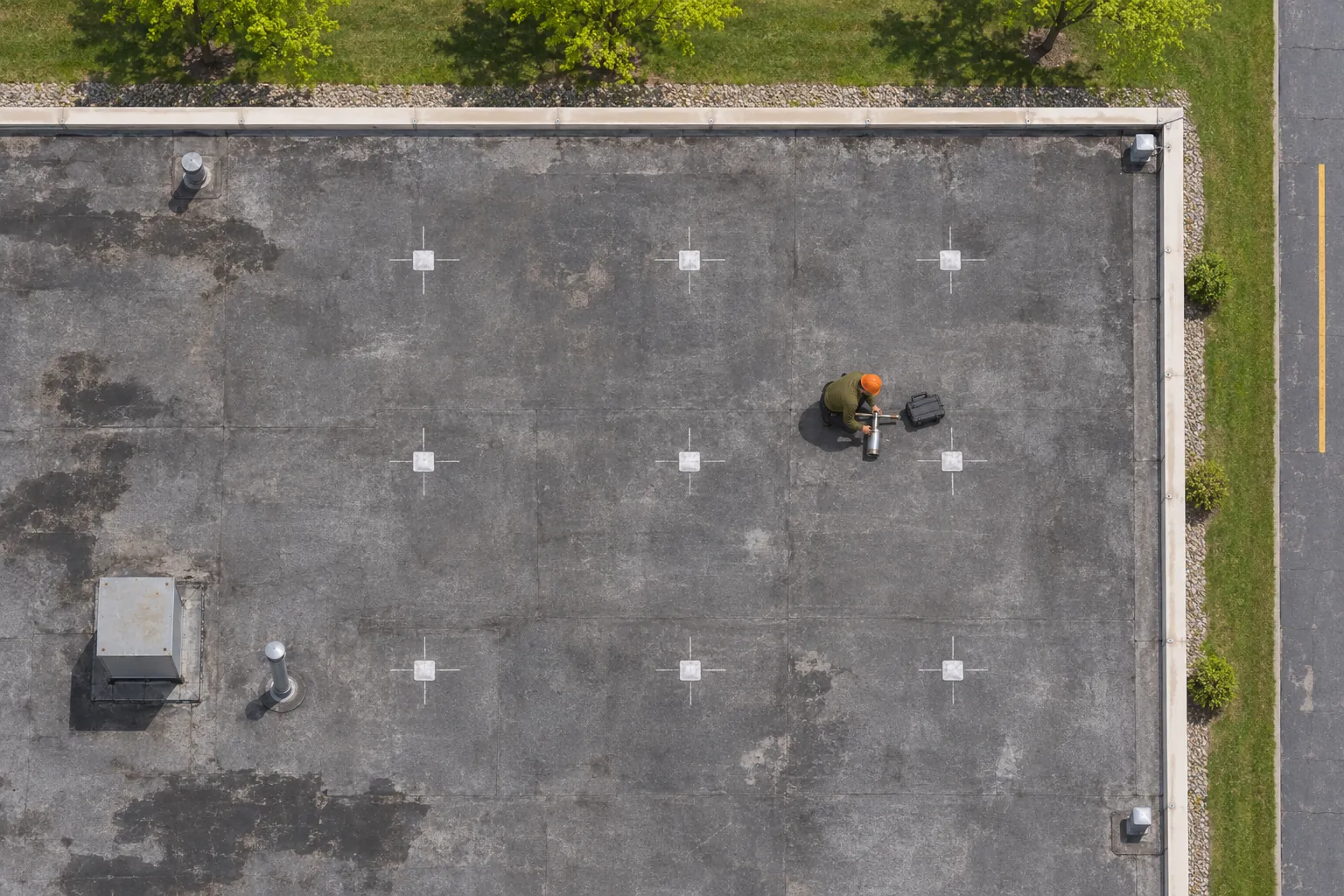
Tell us the building type and roughly how many leak spots you see. We inspect fasteners, laps, and panels, then send a written repair price.
Four steps take a leaking metal roof back to tight laps and fasteners.
We check fasteners, laps, ridge caps, and penetrations along each run, marking every leak point and rusted area on a roof plan.
Screws are torqued and backed out at sample spots to see whether they still bite the purlin or need upsizing.
Rusted panels are swapped, laps are sealed inside the joint, and fasteners are reset or upsized with new washers.
Repaired laps and boots get water run over them where practical, and the roof plan and photos come to you.
Metal buildings often share a roof line with low-slope sections or plant equipment.
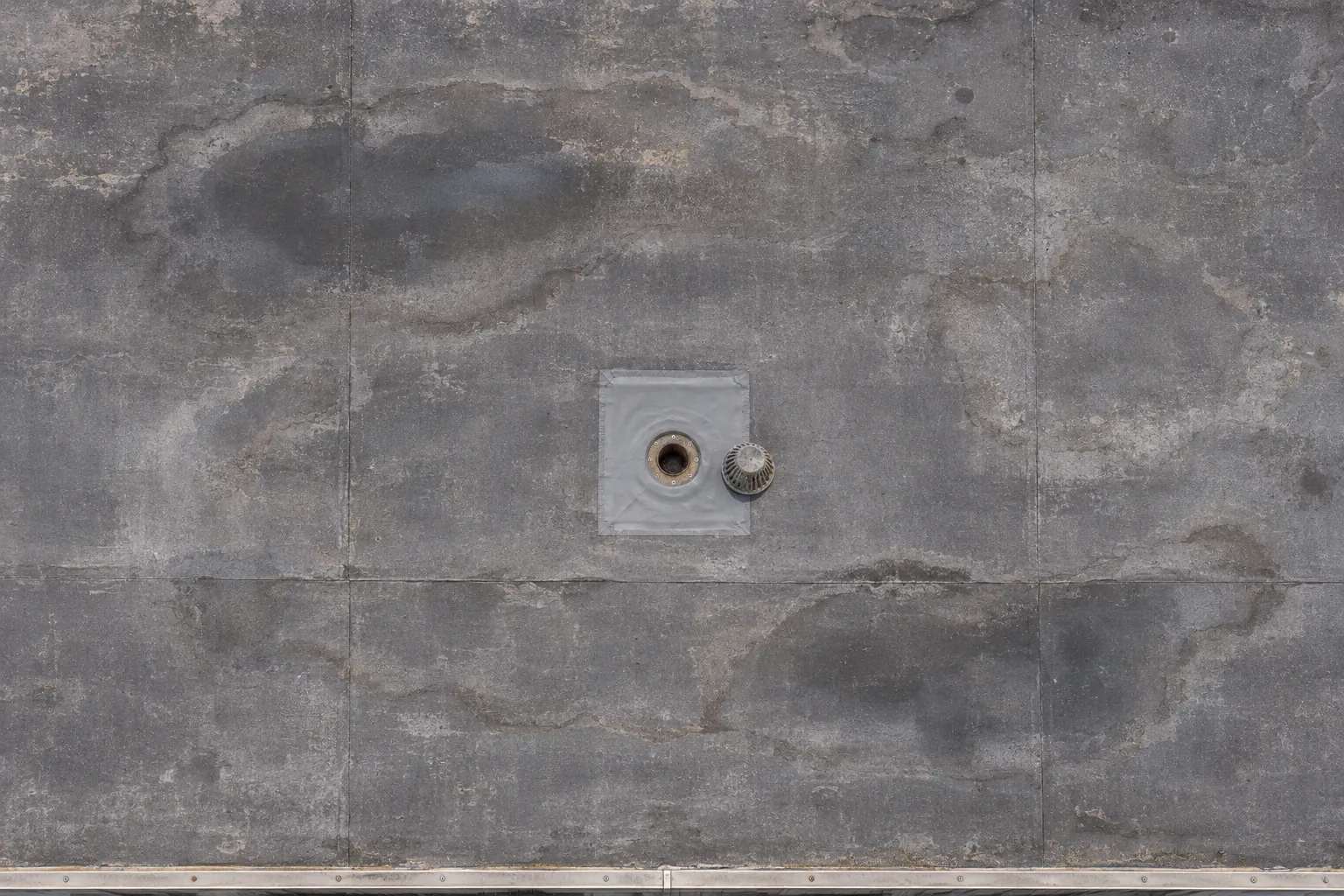
Flat additions and office wings beside a metal shop leak at the transition, where the membrane meets the panels.
Flat roof repair details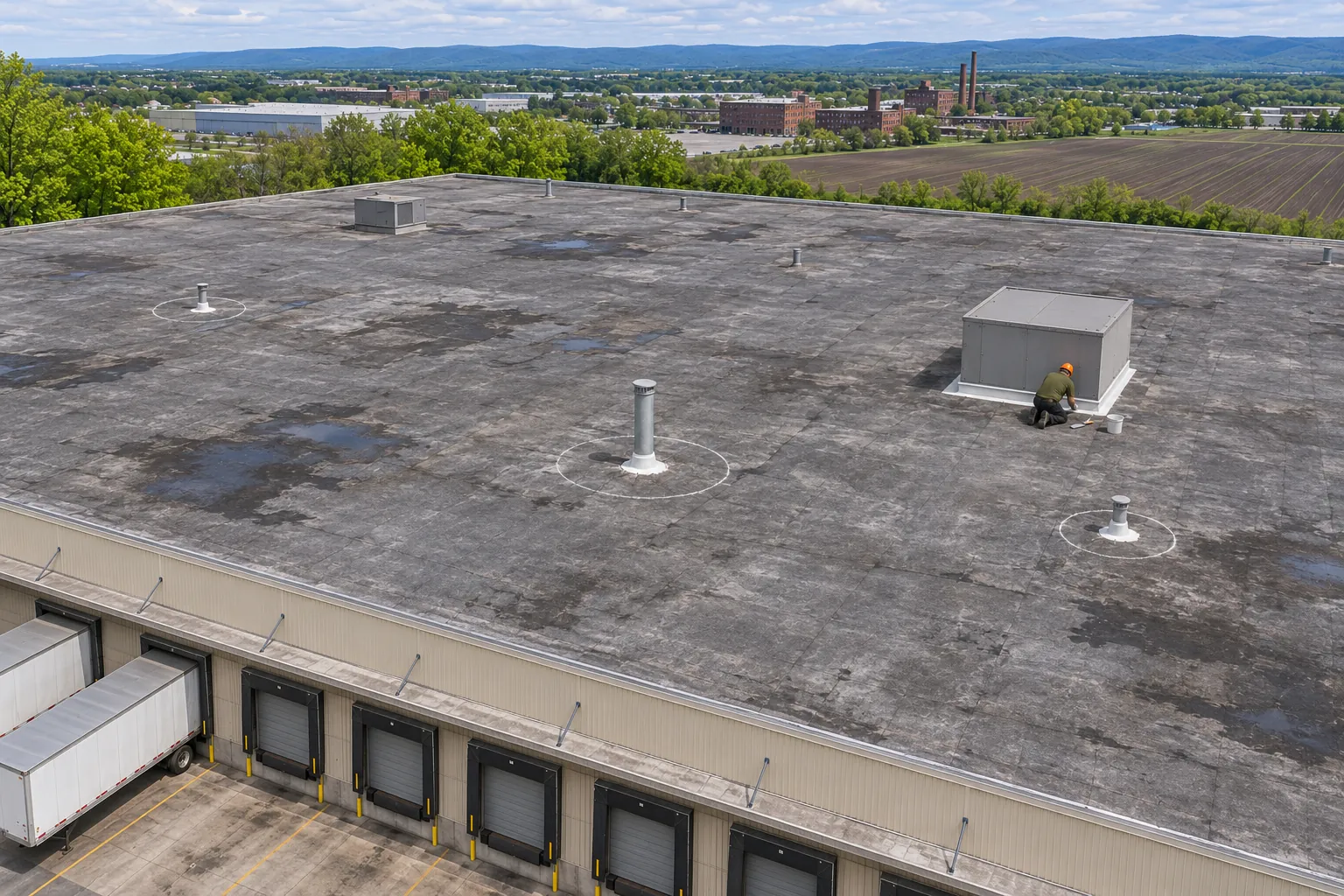
Some drips under metal roofs are condensation, so tracing separates roof leaks from moisture forming on cold steel.
Leak repair details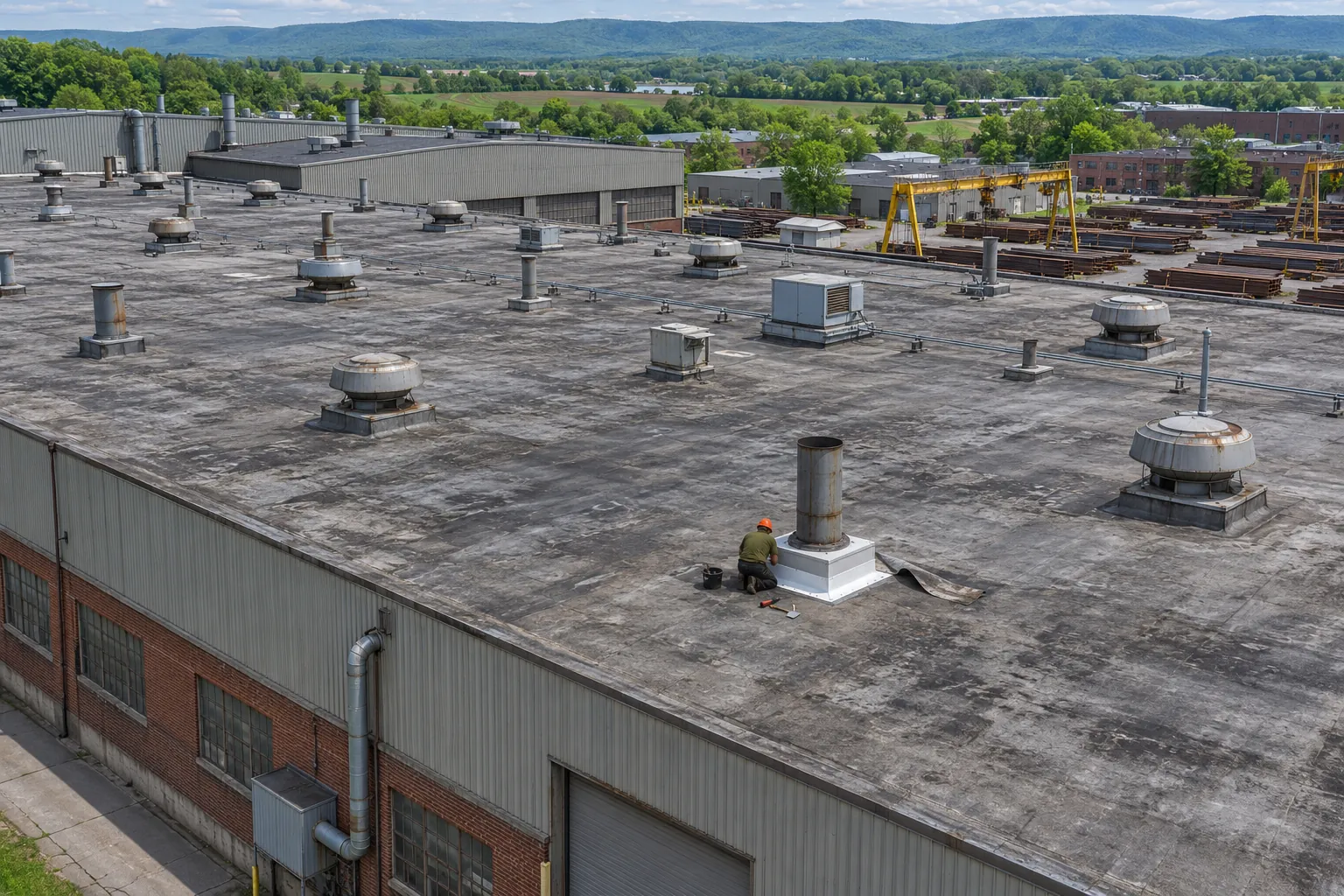
Plant roofs carry fans and stacks through the panels, and those openings get flashing built for heat and discharge.
Industrial repair detailsAnswers about screws, panels, and seams on metal commercial buildings.
Sealant covers the hole but leaves the attachment problem in place. If the screw has stripped out or missed the purlin, the panel keeps moving and the dab cracks. We check the washer, the hole, and the bite into the framing, then upsize or relocate the fastener so it holds.
Often, yes. When the leaks come from flashing defects at a few penetrations and the panels around them are solid, each opening is reflashed. We look for a shared cause, such as panel movement or poor earlier work. Rust through the panels or purlins changes the answer.
Sometimes. The panel profile, the laps, and the rust on its neighbors decide how much comes out. We inspect the fasteners and corrosion around it first. The new panel has to lap into firm metal on each side, so the replacement can run a little larger than the rust patch.
Repairs to fasteners and laps hold as long as the panels and framing around them stay solid. An oversized screw in firm steel outlasts any sealant dab. Where neighboring panels are thinning, we say so in the findings so you can plan for replacement.
The joint has to be realigned and refastened before new sealant can do anything. We find out why the lap opened, then rebuild it with sealant tape inside the joint. A thick bead on top that tries to hold moving panels together fails within a season or two.
Often. Warm, moist air inside a building can drip off cold steel on winter mornings and look exactly like a roof leak. We compare drip timing with the weather and check the underside of the panels before repairing anything on top.
Send the address and where the drips show. We check fasteners, laps, and panels, then price the repair in writing.