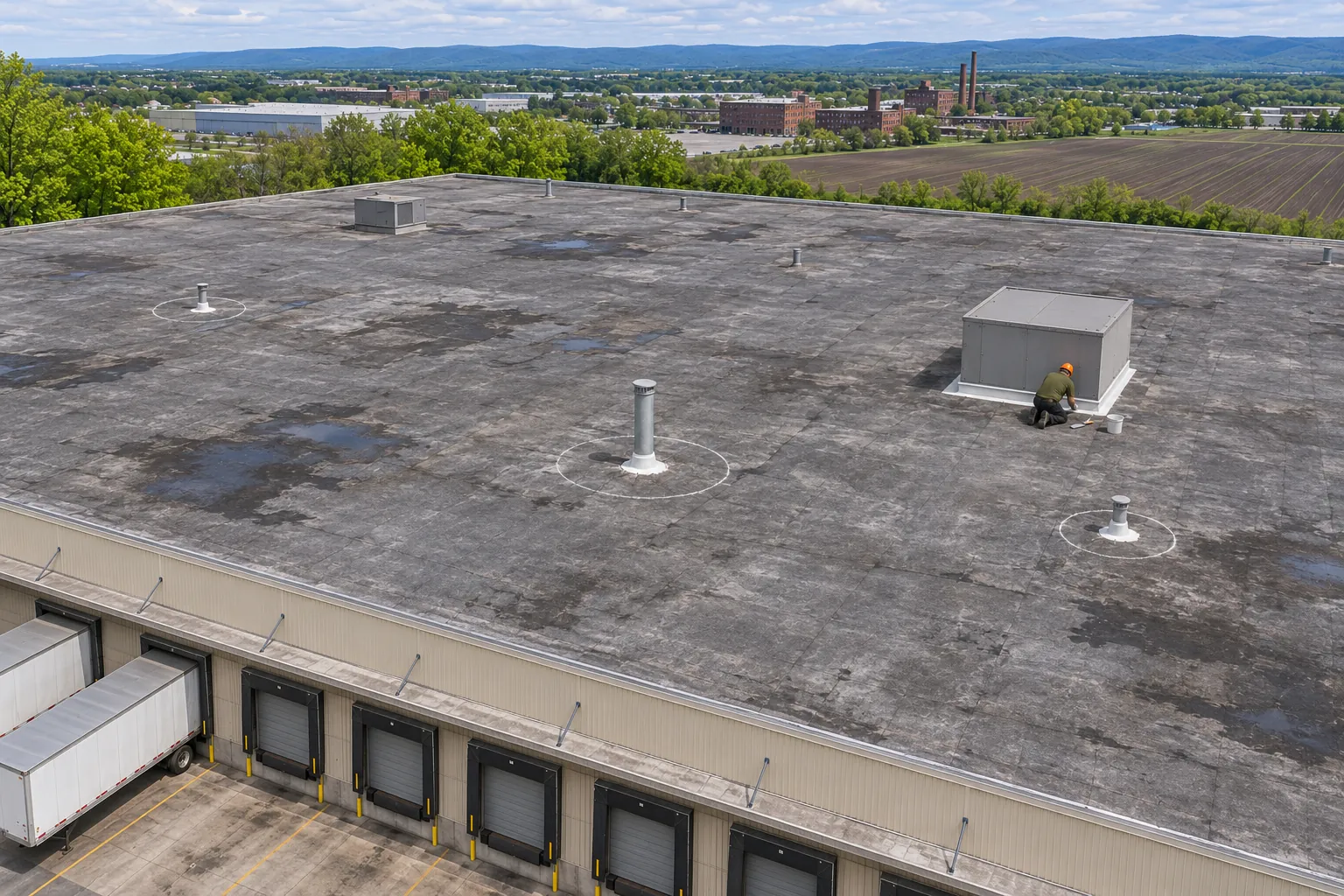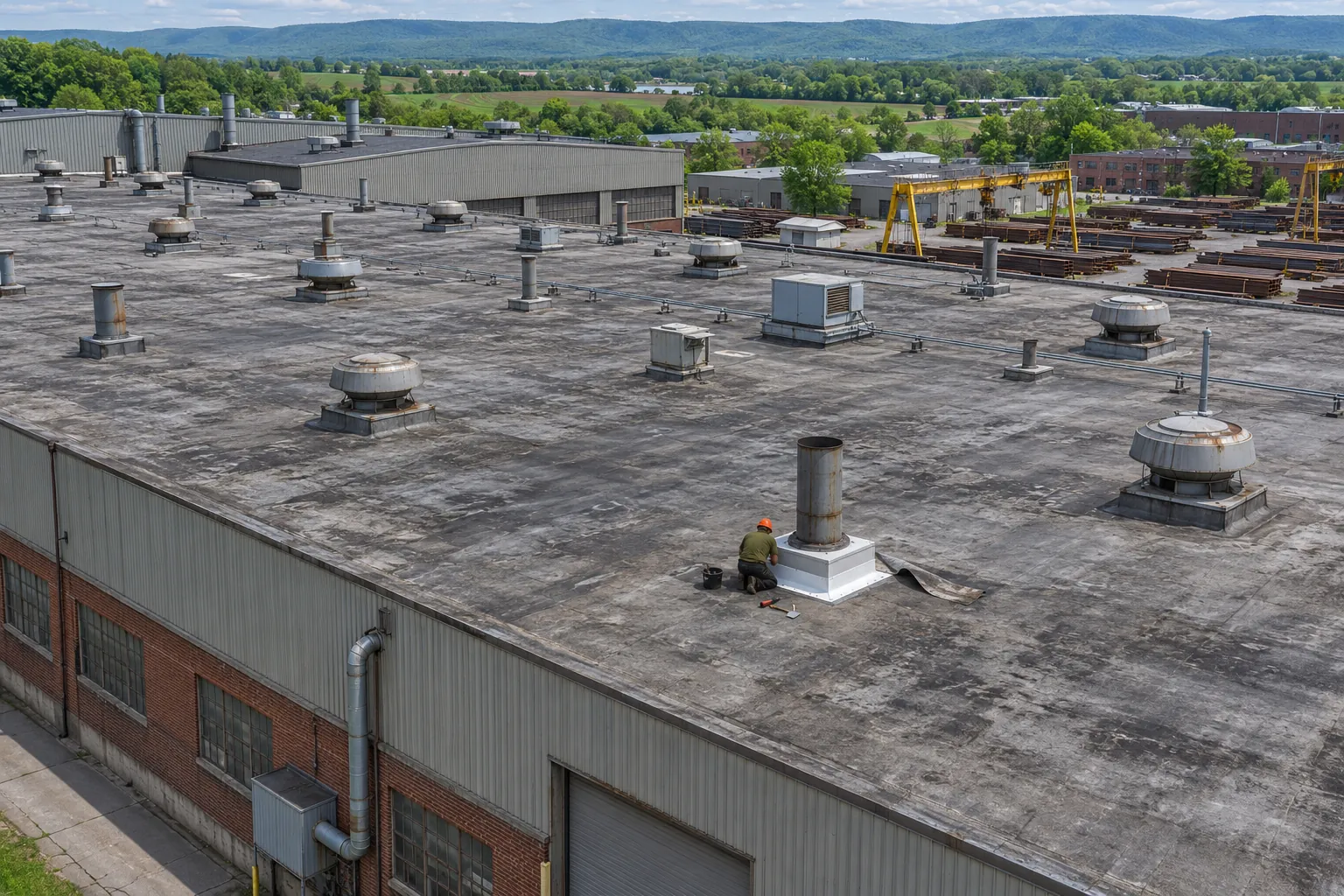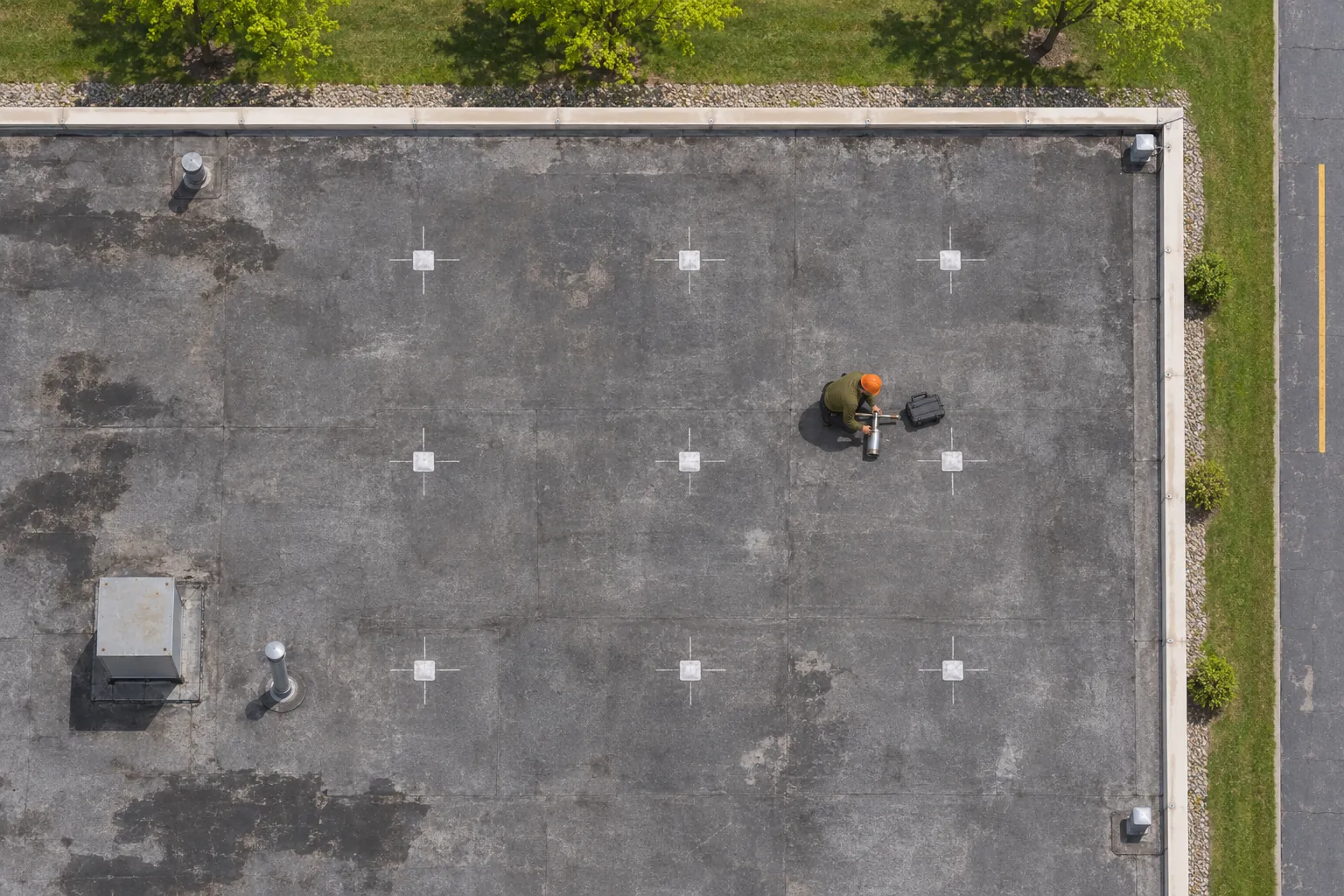
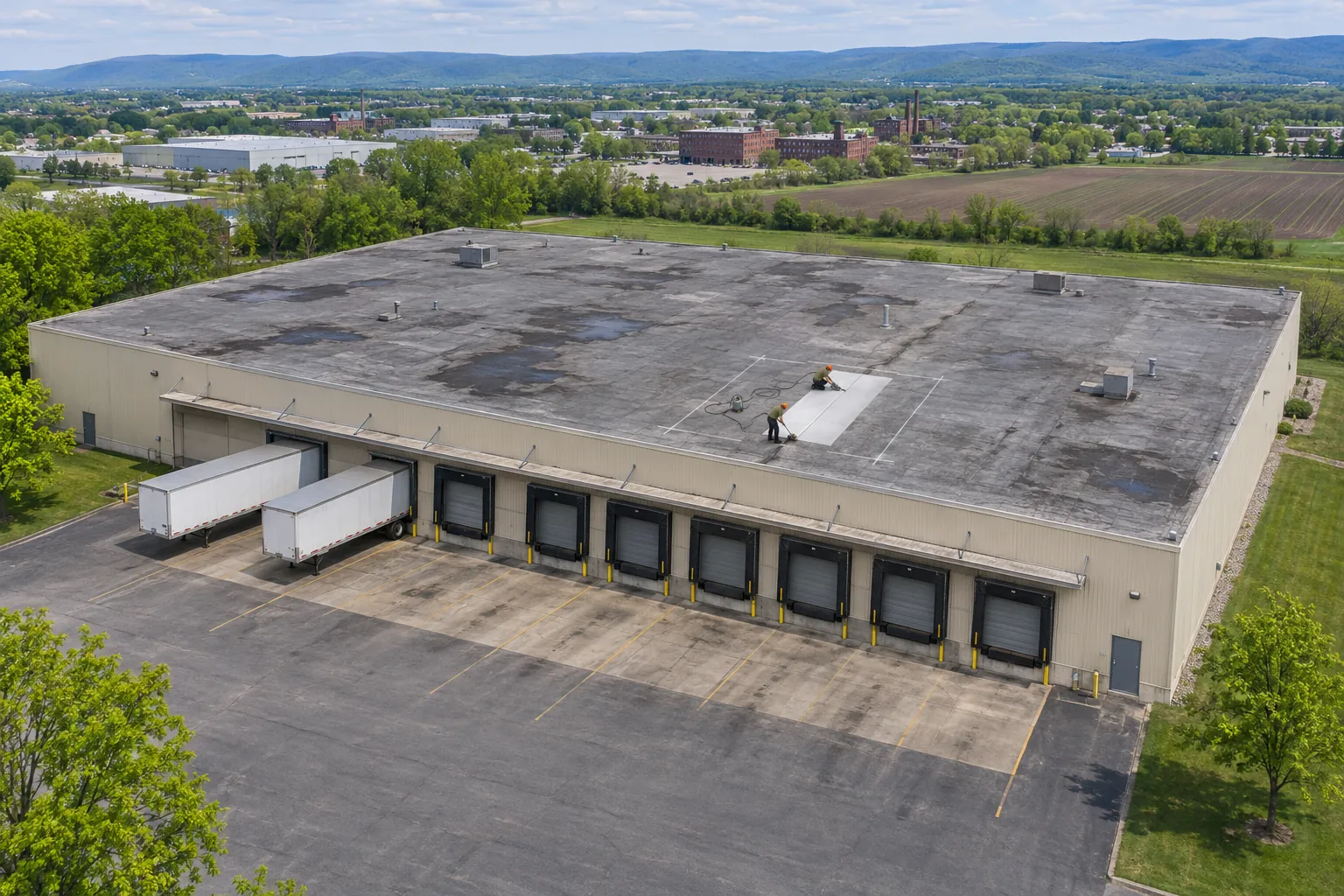
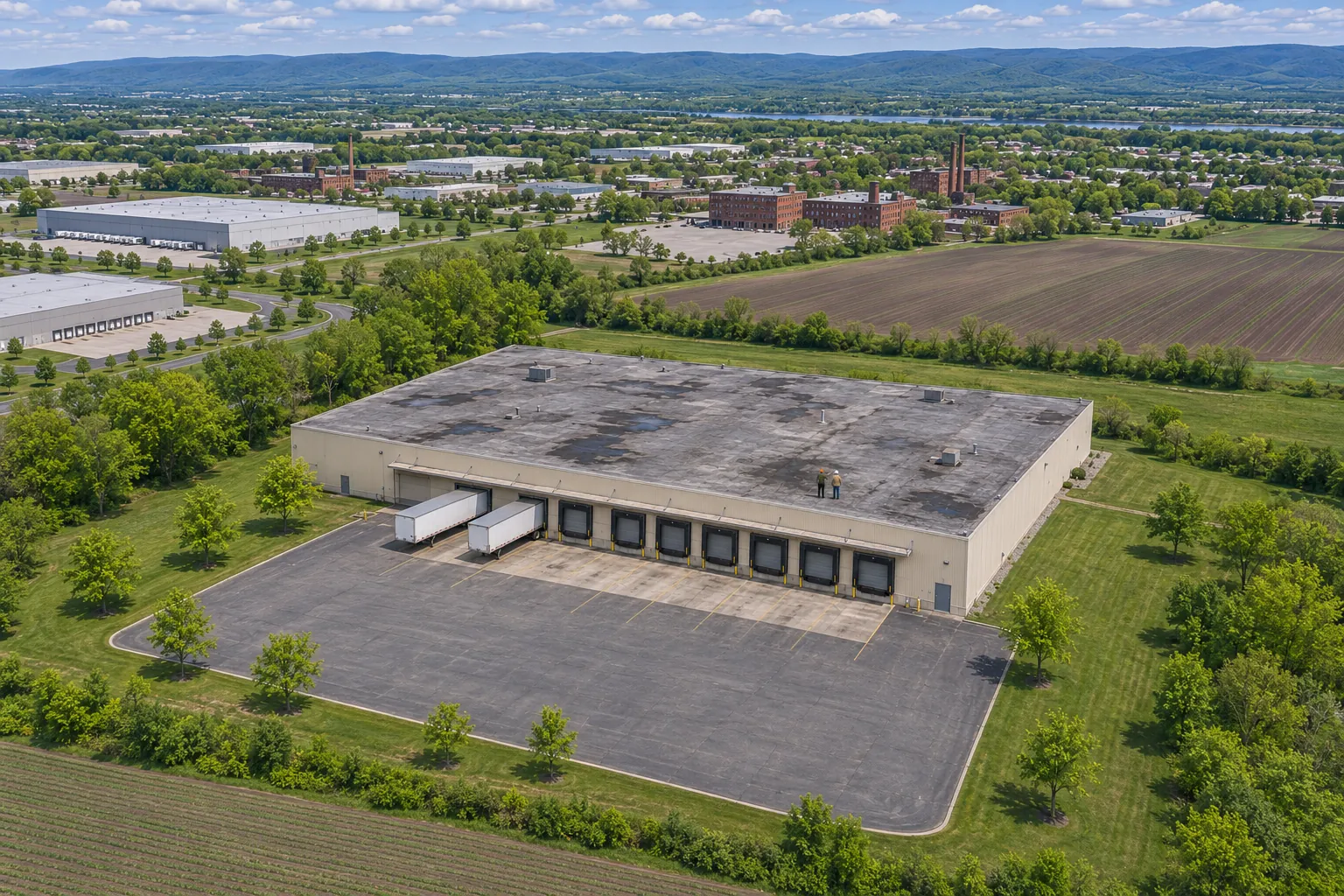
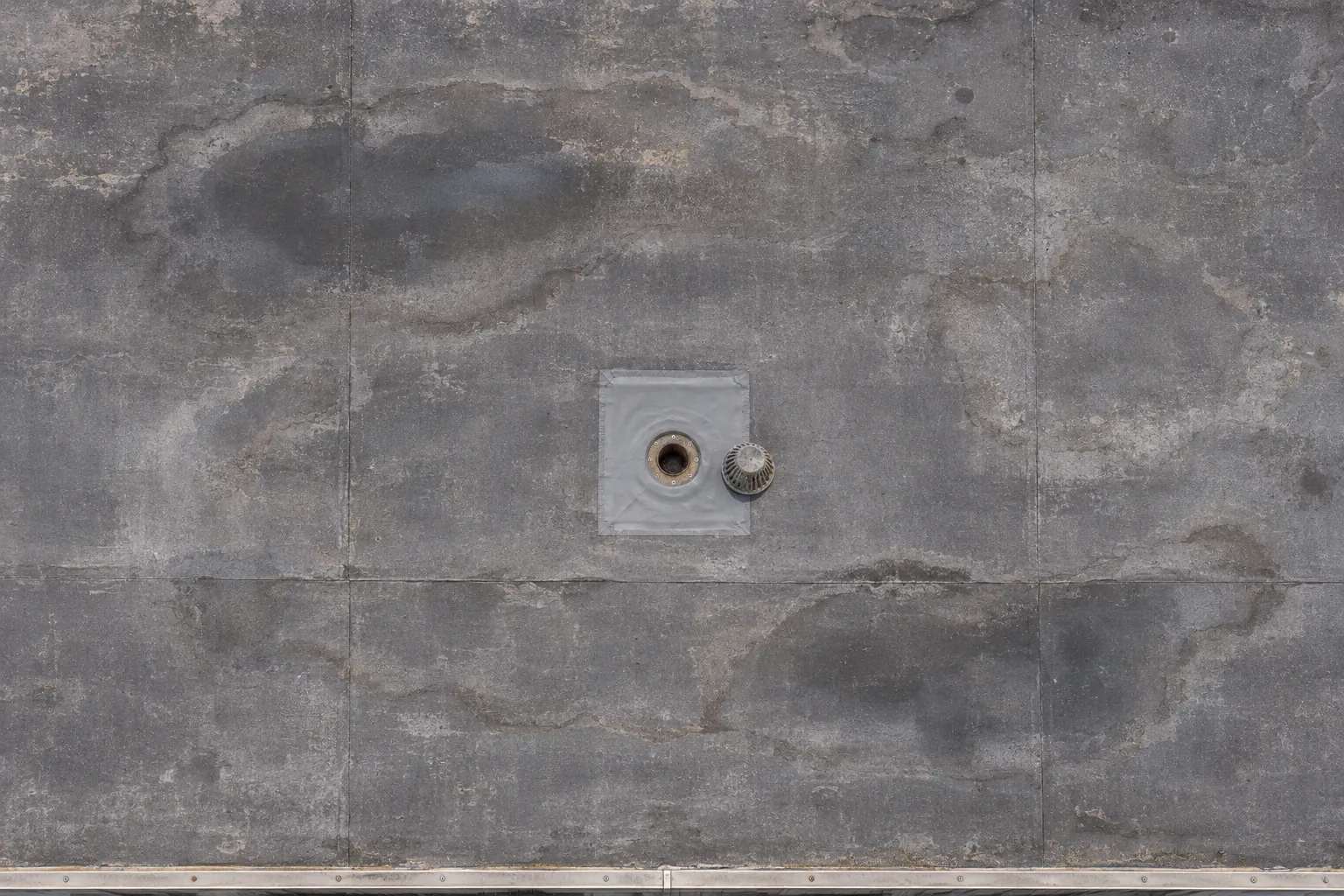
Older membrane and built-up roofs with patched openings, layered repairs, and seams that need cutting back to dry material.
- Closed-over openings
- Layered old patches
- Brittle edge laps
We take on New Cumberland commercial roof repair for older buildings, including curbs and openings left by equipment that was removed years ago.

New Cumberland commercial roof repair on older buildings often includes curbs that no longer carry any equipment.
An unused curb is another set of flashing seams to leak. Removing it makes sense once its equipment connections and supports are dealt with, and the plan for the opening is settled first.
Closing the roof takes a matched deck panel, insulation of the same thickness, and new covering tied into the roof around it. A membrane patch stretched across the hole does not hold up to snow or foot traffic.
Older roofs carry leftover details that leak in their own ways. These are the ones to watch.
Curbs left from removed units keep aging flashing and loose caps that let water into the opening below.
Deck around a patched opening that flexes underfoot has rusted or rotted from years of slow leaks.
Ice dams along low edges and gutters back meltwater under laps and flashing on older roofs.
Patch on patch at the same spot means the original detail was never fixed, only covered again.
Water coming through a covered-over hole needs a temporary seal and a proper rebuild of the deck there.
Fewer openings in an older roof means fewer places for water to get in.
Taking out an unused curb removes four flashed corners and a cap that would need repairs again.
A matched deck panel and insulation fill the opening, so the roof carries snow and foot traffic evenly.
Clearing old details and tired eave flashing gives meltwater fewer places to back up under laps.
Photos of removed curbs and closed openings keep the building records accurate for the next owner.
Each repair type below shows where it fits on older New Cumberland roofs.
Older membrane and built-up roofs with patched openings, layered repairs, and seams that need cutting back to dry material.
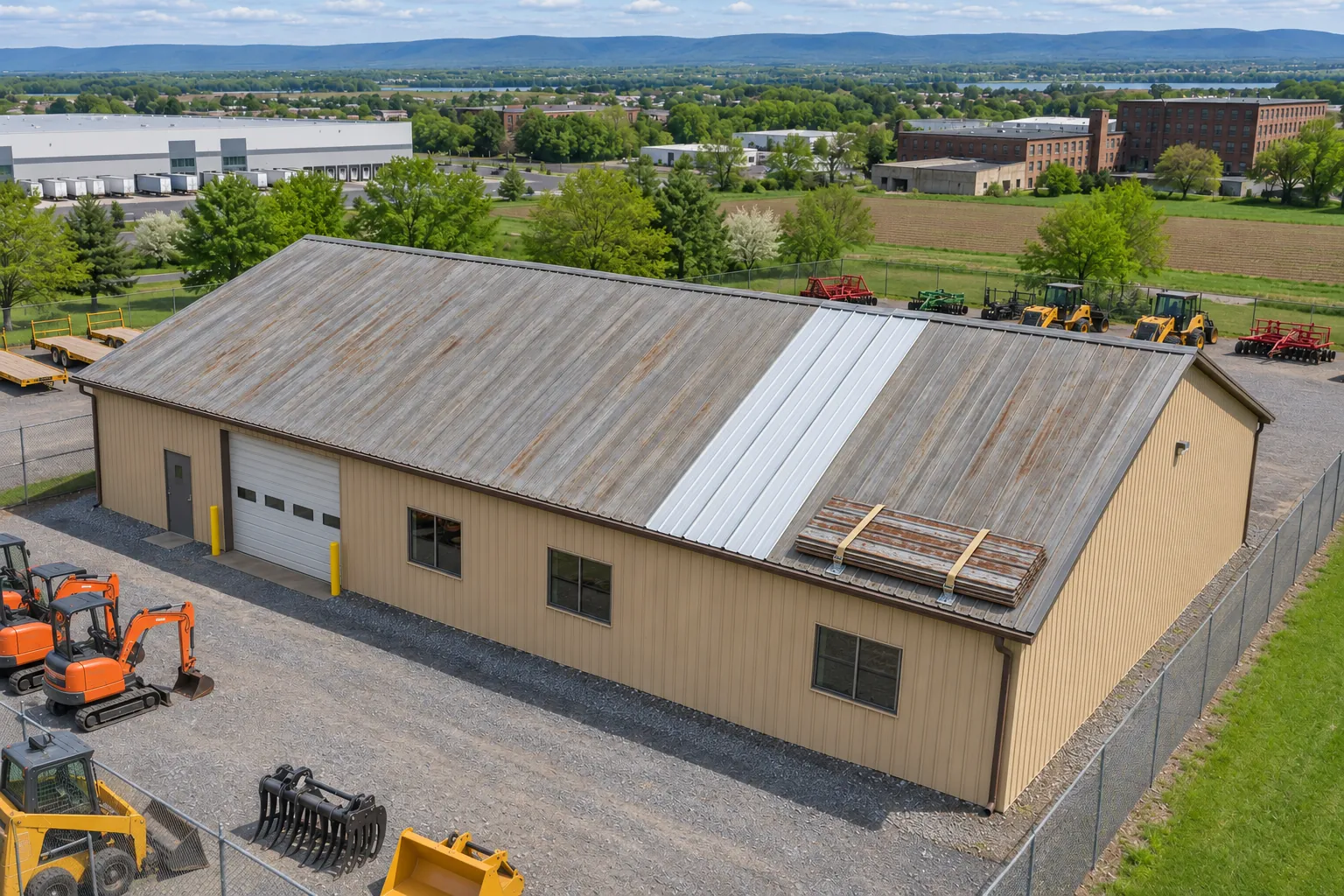
Metal additions and garages on older properties, with rusted eaves, tired washers, and opened laps.
Leaks through old openings and patched holes are traced before the area is opened and rebuilt.
Former shop and light industrial buildings carrying abandoned stacks and fan curbs that can come out.

Send the address and what equipment the curb once held. We check it, plan the opening, and price the removal and repair in writing.
Four steps take an unused curb or patched hole back to a solid, flat roof.
We check that ducts, wiring, and gas lines to the curb are disconnected, and note the supports beneath it.
The curb, its flashing, and any wet insulation around it come out, exposing the deck opening.
A matched deck panel is fastened in, insulation of equal thickness goes on, and new covering ties into dry roofing.
The closed opening is water-tested where practical, and photos mark its location for the building records.
We cover the towns below as well. For any other location, call us or send us a message if your building sits between these towns.
Home base: office roofs, brick blocks, and logistics warehouses.
Warehouse roofs where moved racks shift the leak report.
Office roofs with split edge flashing and lifting coping.
Drains leaking on warehouse roofs after nearby work.
Open offices and shops with clear leak reports.
Answers about old curbs, decks, and winter leaks on older commercial roofs.
Yes, once the equipment connections and supports under the curb are dealt with. We settle how the opening will be rebuilt before removal starts. Closing it takes a matched deck, insulation, and covering tied into the roof around it, instead of a membrane patch stretched across the hole.
It stays until those lines are disconnected by the right trade. We note what runs through it in the findings, and the curb flashing is repaired in the meantime. Once the lines are gone, the curb comes out on a later visit.
When the deck flexes, shows rust, or has rotted around a long-term leak. Core cuts and a look from below show how far the damage runs, and the new deck section is sized to reach solid framing.
They can be. New membrane has to be compatible with what it ties into, so we identify the existing layers before choosing repair materials. Asphalt-based roofing needs a different patch than single-ply membrane, and the wrong pairing peels at its edges.
By repairing the laps and eave flashing that meltwater reaches, and by clearing gutters and outlets so water drains. Where heat loss at the edge keeps feeding ice, we note it so the building side can be addressed too.
Heavy wet snow can make the roof unsafe to walk until it is evaluated. Interior protection and clear leak reports continue while the roof waits for safe access. Once the snow clears, the eaves, drains, and laps that held meltwater are inspected first.
Send the address and where the old opening or curb sits. We plan the repair and price it in writing.