Single Entry Repair
- Evidence
- One drip, one storm pattern
- Insulation
- Dry past the entry
- Entry Points
- One seam, curb, or boot
- Inside
- Stain only
- Usual Fix
- Reseal or reflash the source

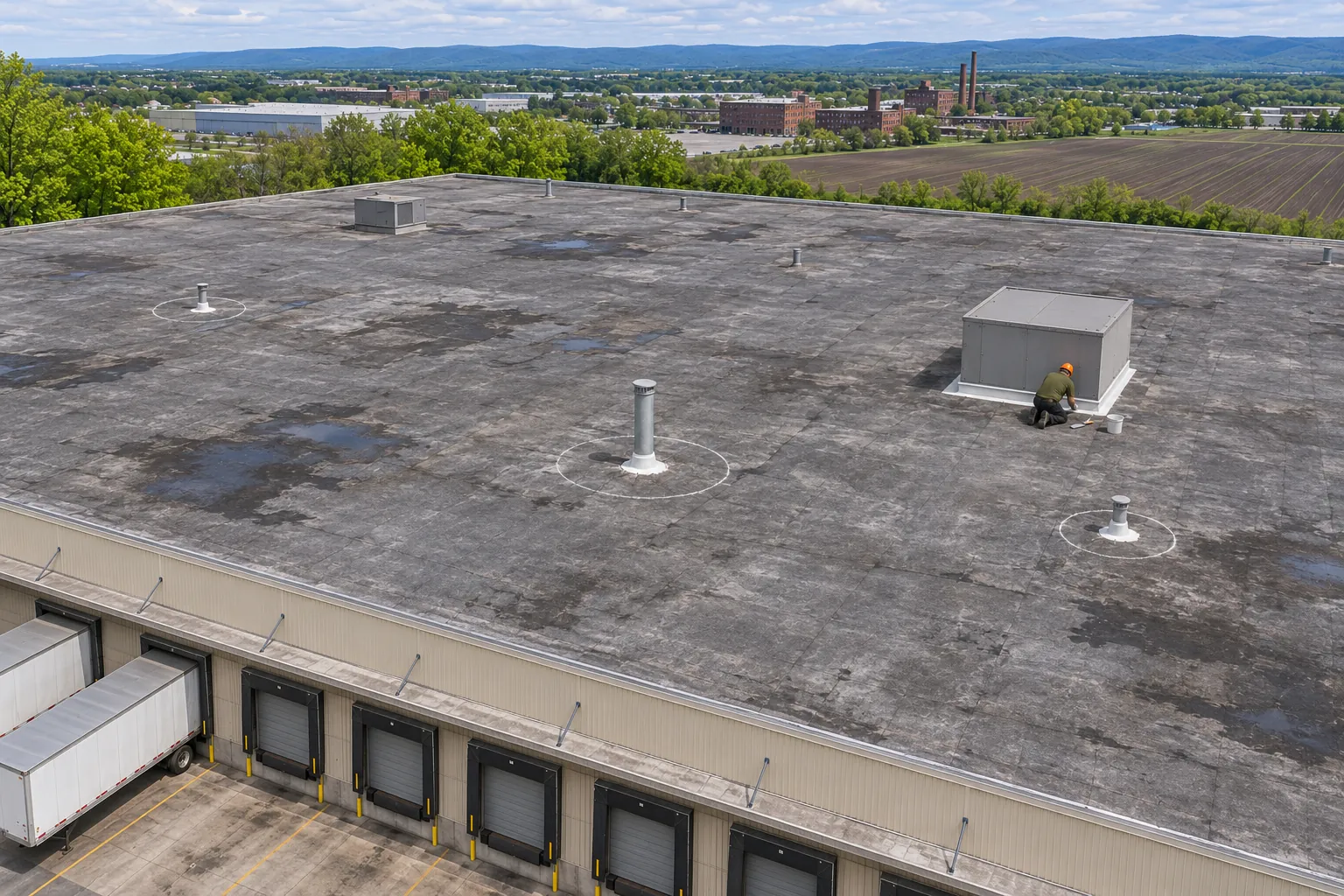
As a Harrisburg commercial roof leak repair contractor, we trace water from the stain to its entry point, then repair the seam, curb, or flashing.
A Harrisburg commercial roof leak repair can be a single seam or a whole wet area. The columns show how the evidence points to each.
Leaks show up inside long before anyone sees damage on the roof. These are the signs worth reporting right away.
Water can travel along the deck or a beam before it drops, so a mid-building stain still traces back to a roof opening.
Leaks that appear only when a fan runs point to condensate drains or airflow through the unit as well as the curb flashing.
Melting snow backed up behind ice at drains reaches seams that rain never touches, so these leaks follow the thaw.
Open coping joints and loose wall flashing let water run down inside a parapet and show up on the wall instead of the ceiling.
A leak over inventory, panels, or servers needs a temporary dry-in and interior protection while the source is traced.
Tracing and repair run together. Each method answers a different question about where the water comes from.
Drip locations are marked inside, matched to the roof grid above, and compared with rain timing before seams, drains, and curbs are opened.
The curb flashing and cap are checked while the unit runs, so condensate lines and cabinet leaks are separated from roof leaks.
Coping joints, counterflashing, and wall seams are inspected where the roof meets brick or block, a common source on older buildings.
Core cuts and probing show how far water spread in the insulation, so the repair covers wet board as well as the hole.
Tracing first means the money goes into the opening that matters.
Fixing the actual seam or curb ends the habit of sealing every joint on the roof and hoping one of them was it.
Catching water before it spreads keeps the wet area under the membrane small, so less board needs replacing.
A repaired roof over racks and offices stops repeat damage to stock, ceiling tiles, and finishes.
Photos of the water path and the repaired opening answer lease and insurance questions with roof facts.
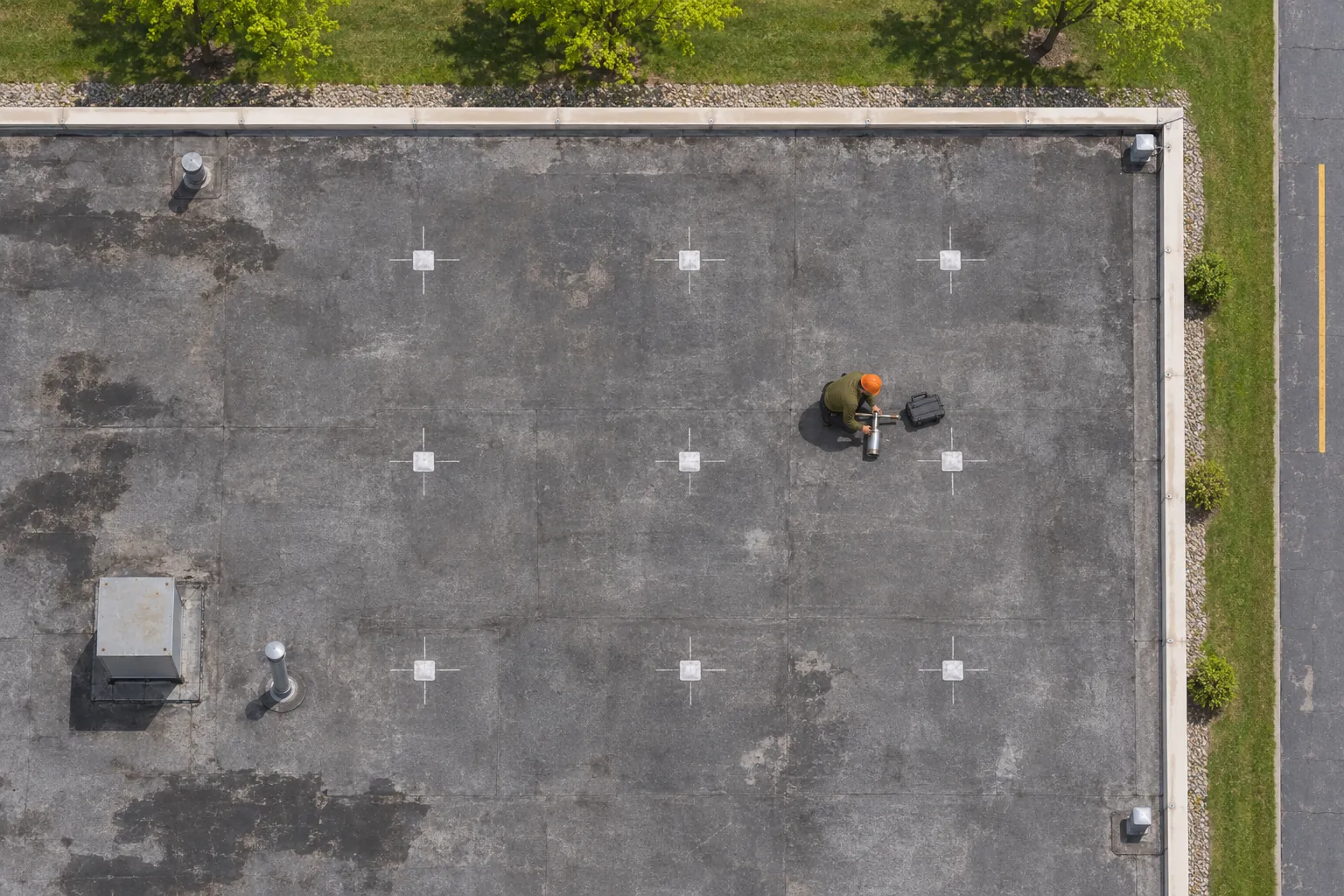
Send the address, where the water lands, and when it drips. We trace the path before cutting, and price the repair once the source is found.
Every leak call runs through the same four steps.
We note where water lands, when it started, and what the weather was, and photograph the stain and ceiling grid.
Interior marks are located on the roof above, and nearby seams, curbs, drains, and walls are inspected in widening rings.
Once the entry is confirmed, the seam, flashing, or curb is rebuilt and any wet insulation around it is replaced.
Repaired areas are water-tested where practical, and the report shows the path from the stain to the fix.
Once the source is found, the fix usually belongs to one of these repair types.
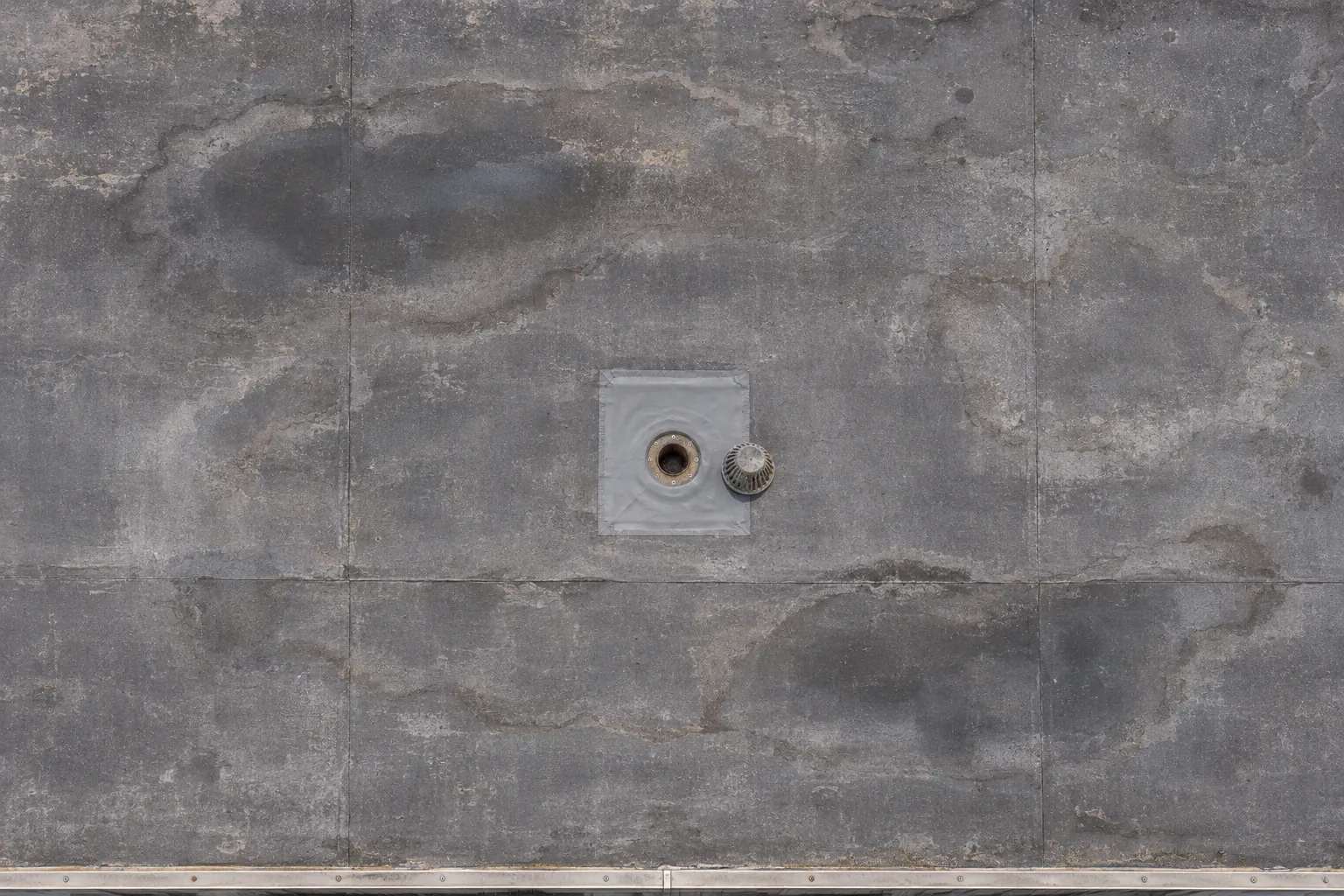
A traced leak at a split lap or drain on a membrane roof becomes a flat roof repair with core cuts and patching.
Flat roof repair details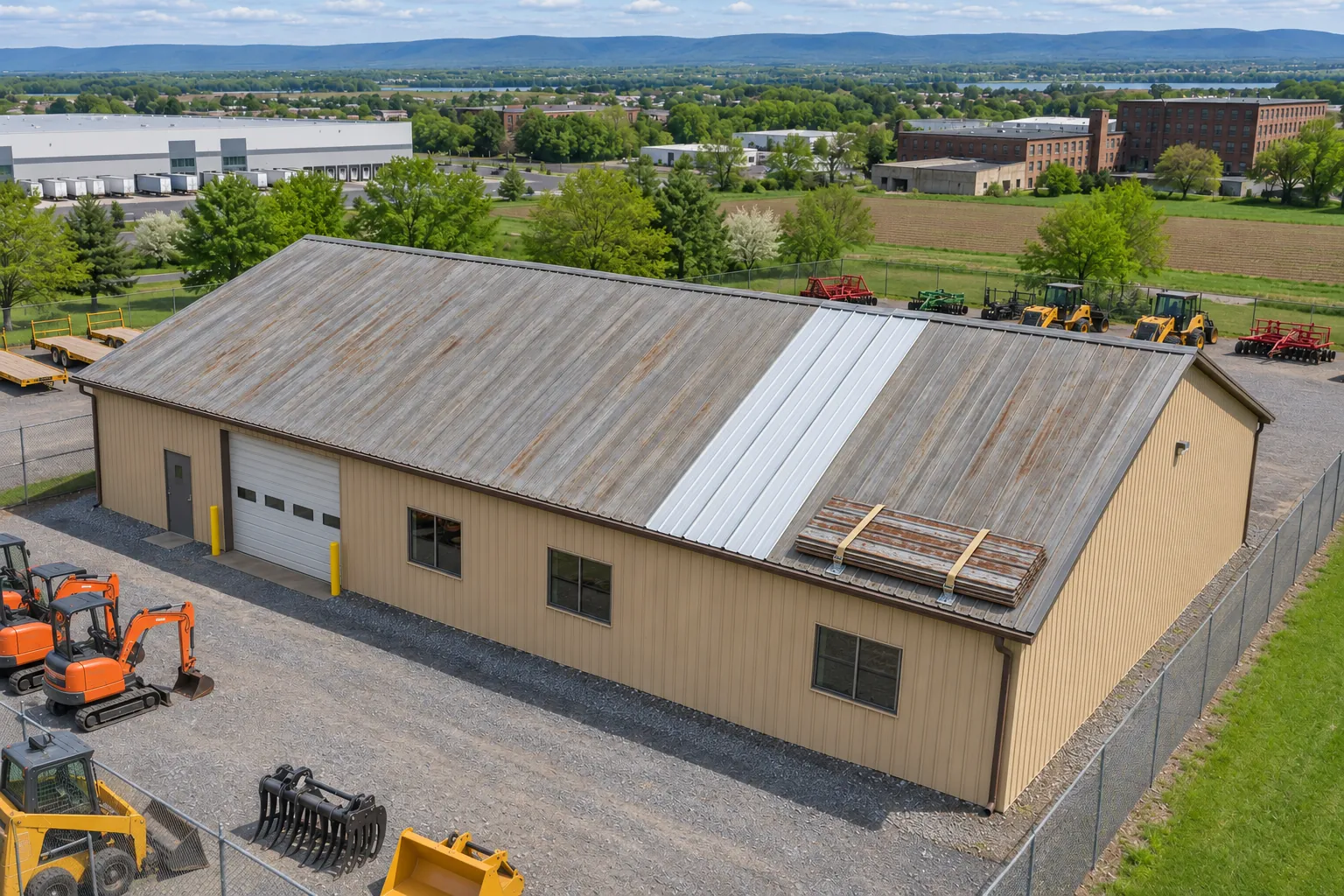
Leaks traced to screws, laps, or pipe boots on a metal building are repaired at the panel attachment.
Metal roof repair details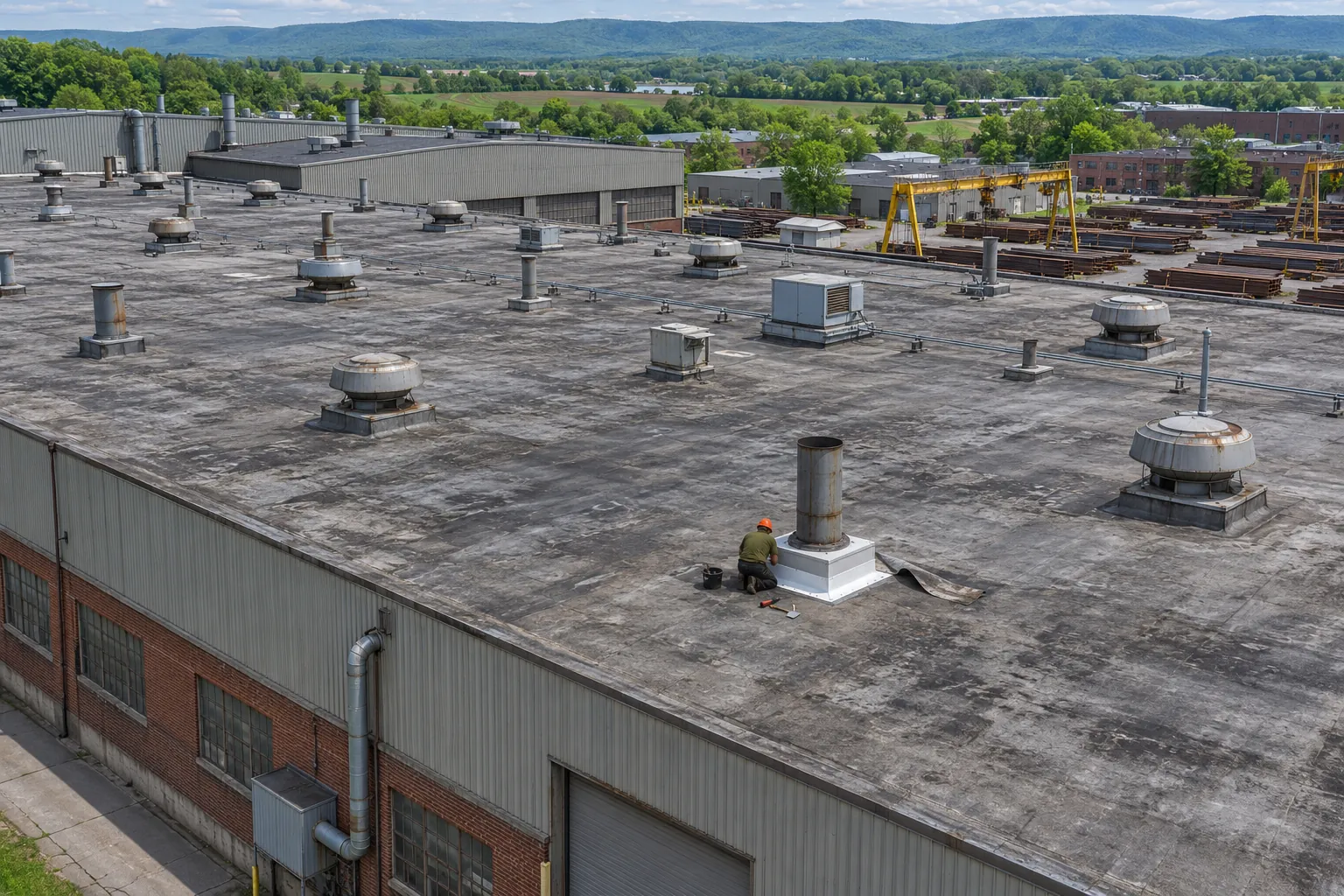
Plant roofs with fans and stacks leak at their curbs, and those repairs are planned around production and discharge.
Industrial repair detailsAnswers about finding leaks, rooftop units, cost, and who pays.
We narrow the search with the drip timing, the roof layout, and the stain pattern, then open ceiling tiles only where needed. Interior access is coordinated with your staff. The inspection follows evidence across the roof assembly, because a ceiling hides how far water travels from where it entered.
Fan operation points to the unit's own drains, or air pulling water through the cabinet, as well as the curb flashing. We inspect the curb and roof covering while the equipment is checked for its own water sources. Sealing every joint around the unit before that wastes the visit.
An on-roof inspection does. Tracing time, the roof system, how many openings are found, core cuts that show wet insulation, flashing and drain work, and roof access all change the price. Wet insulation matters most, because closing the hole over soaked board leaves the damage in place.
Yes, when water is landing on stock or equipment. A temporary seal or tarp on the roof buys time while the source is traced and the permanent repair is planned. We list every temporary repair in the findings so it gets replaced with the real fix.
The lease sets landlord responsibility for roof leaks and for damage to a tenant's stock, so both parties should check the agreement. We document the roof findings and keep the repair scope separate from damaged contents. Insurance coverage turns on the policy and the cause.
Report first. Note where the water lands and when, take photos, and keep people away from wet ceilings and finishes. Move stock only if your building procedures allow it safely. Those notes often save an hour of tracing on the roof.
Send the address and where the water appears. We trace it to the source and repair the opening that let it in.