Patch Or Strip-In
- Damage Size
- A few square feet
- Insulation
- Dry at the core cut
- Membrane
- Still flexible
- Drainage
- Drains run clear
- Usual Fix
- Weld or adhere a patch
As a Harrisburg flat roof repair contractor, we fix split seams, ponding drains, blisters, and wet insulation on membrane and built-up roofs.
A Harrisburg flat roof repair holds when the membrane around it is firm and dry. The columns show when a patch fits and when a wider rebuild makes more sense.
These flat roof conditions show up on warehouses, offices, and strip centers around the city. Each chip shows how fast it needs a repair.
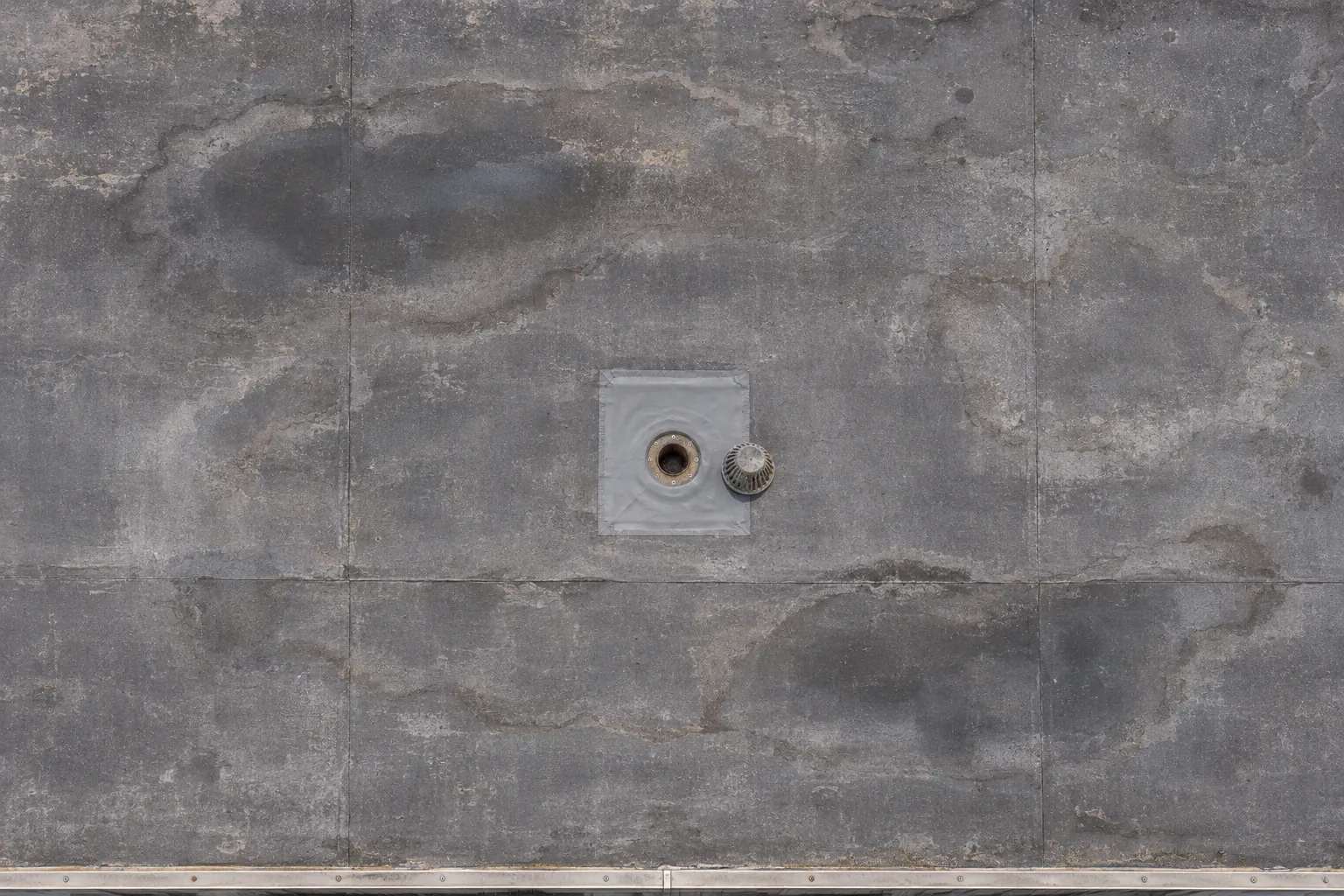
Dark rings and silt lines around a drain show water sitting there for days, often from a clogged strainer or a sunken deck.
Insulation that gives under a boot is usually wet, and wet board loses its grip on the membrane above it.
Edges of single-ply laps that peel back by hand let wind-driven rain run straight under the sheet.
Raised bubbles in built-up or modified roofs trap air and moisture, then crack once foot traffic or freezing reaches them.
When the surface looks fine but water drips near a drain, the bowl, clamping ring, or pipe joint below is the likely source.
Each repair method matches a specific failure on a low-slope roof, and several are often combined on one visit.
Low areas are corrected by replacing crushed insulation, adding tapered board, or clearing the outlet, so water leaves the roof instead of resting on a seam.
Drain repairs replace the clamping ring, strainer, or target flashing, and test the bowl and pipe joint below when water appears under an intact membrane.
Open single-ply laps are cleaned, primed, and welded or adhered with matching material, then probed along the full run for other weak spots.
Blisters are cut, dried, and covered with a reinforced patch that extends onto firm membrane past every edge of the damage.
A well-tied flat roof repair keeps water out of the layers that cost the most to replace.
Closing a seam before rain soaks the board keeps the insulation under the membrane working and avoids a larger tear-out.
A rebuilt drain connection moves water off the roof, which takes the daily load off nearby seams and flashing.
Repairing the roof over racks and loading docks keeps cartons, pallets, and equipment out of the drip line.
Targeted repairs give owners time to budget for a new roof on their own schedule instead of after a failure.
Send the address and a photo of the drain area if you have one. We inspect the outlet, slope, and seams, then price the repair in writing.
Every flat roof repair follows the same four steps, so the patch lands on firm, dry roofing.
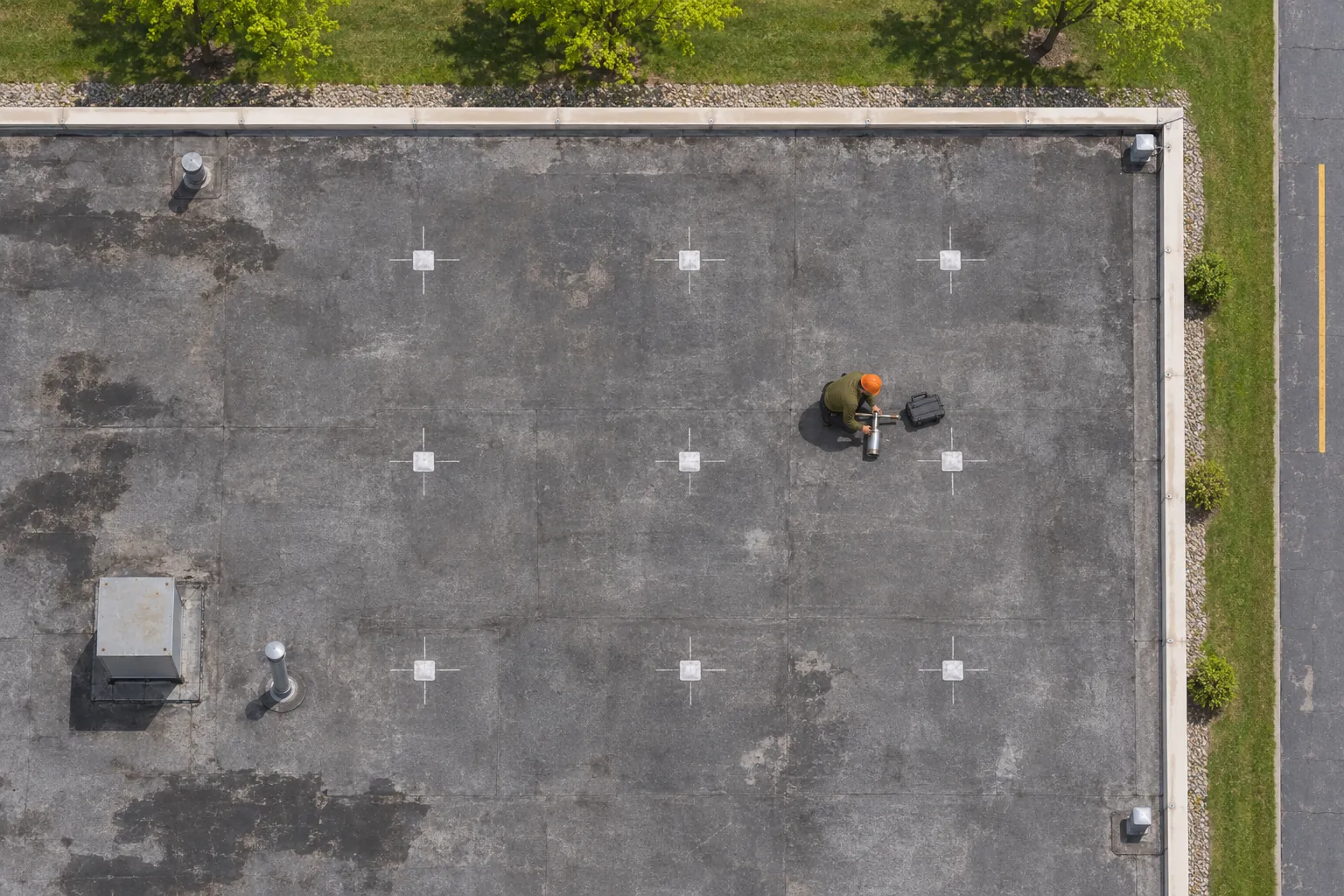
We walk the membrane, seams, edges, and every drain, noting ponding lines, blisters, and soft areas before choosing where to test.
Small core cuts show whether insulation is wet and how far the moisture runs, which sets the edge of the repair.
Wet board is replaced, the deck is checked, and new membrane is welded or adhered past the damage onto dry roofing.
Drains and repaired laps get water run across them, and the photos and core results go into your report.
Flat roofs share problems with other systems on the same building. These repairs often come up on the same visit.
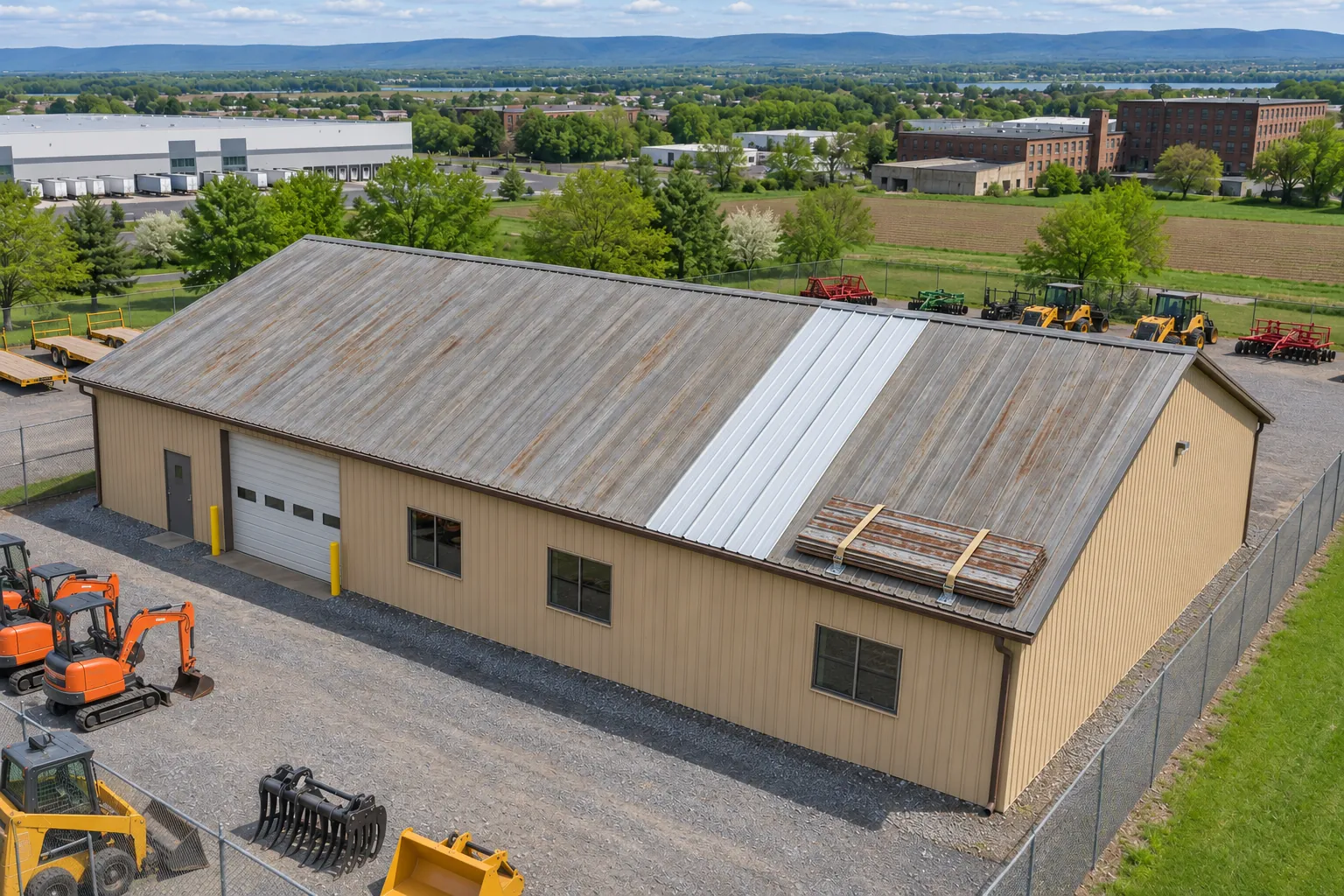
A metal addition or canopy beside the flat roof leaks at its laps and fasteners, and the joint between the two roofs needs flashing too.
Metal roof repair details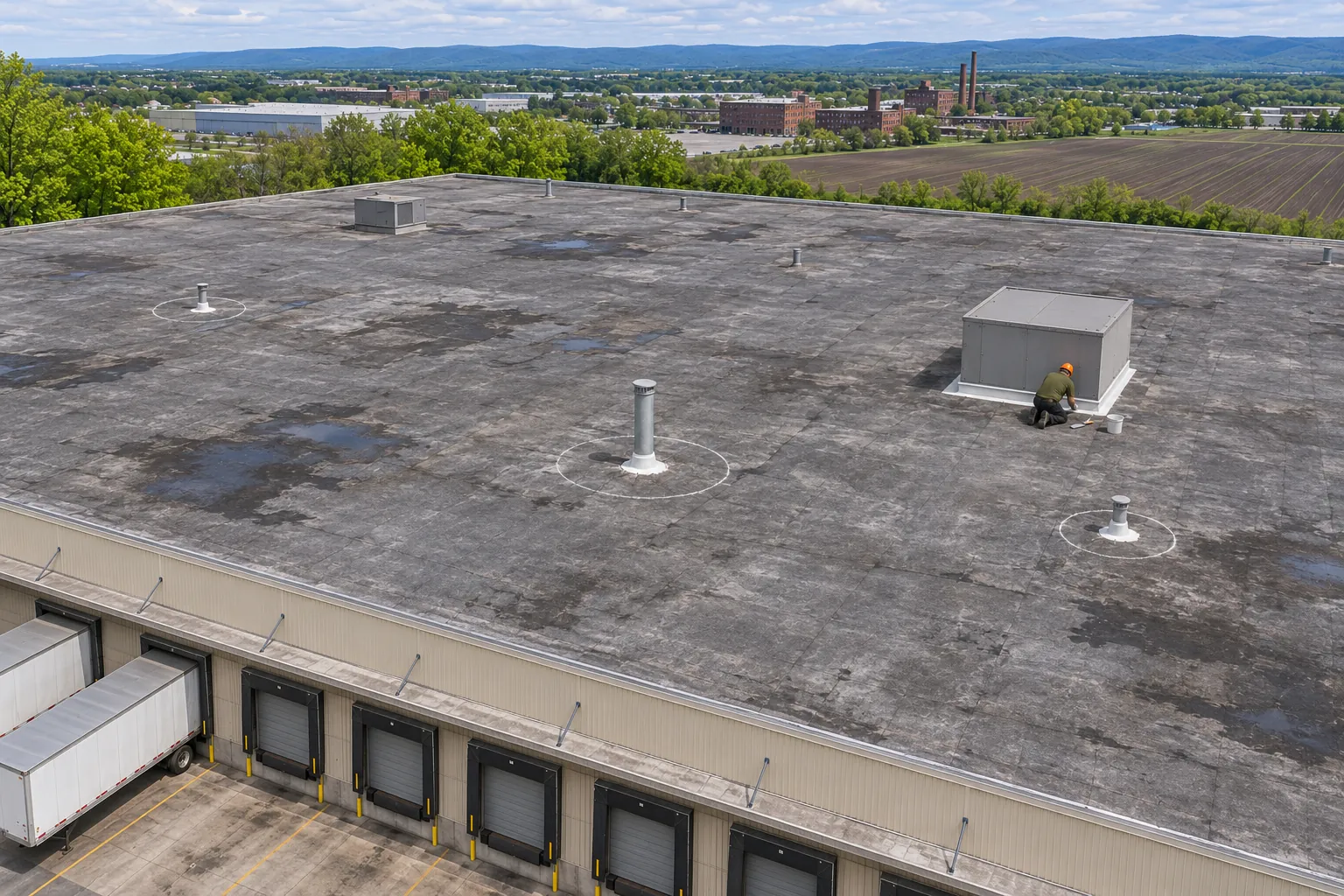
When the stain sits far from any obvious flat roof damage, leak tracing follows the water across the deck before anything is cut.
Leak repair details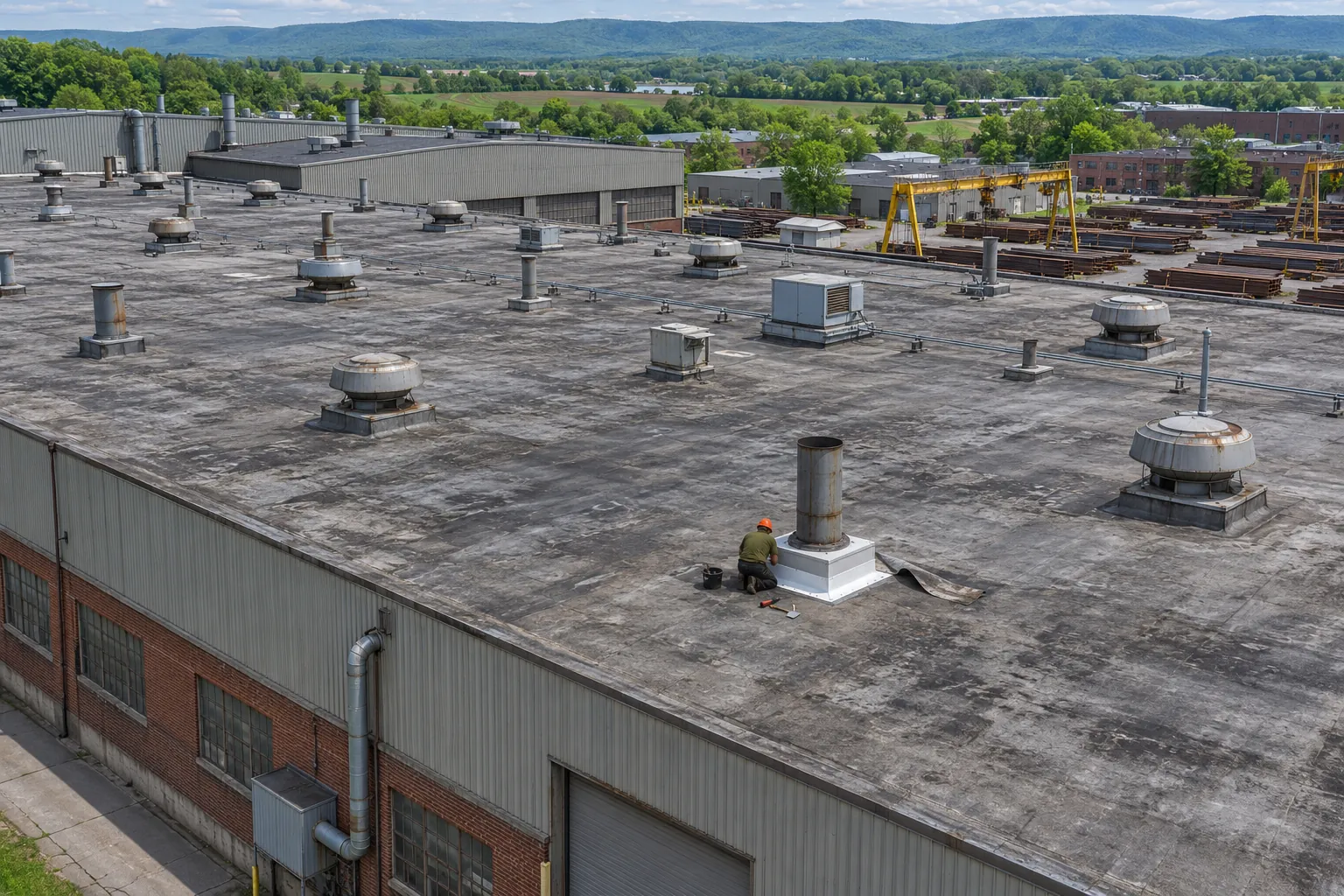
Plant roofs with fans and stacks need repairs planned around equipment, exhaust discharge, and production schedules.
Industrial repair detailsAnswers about drains, patches, and repair cost on low-slope roofs.
It needs a look at how long the water stays and why that spot holds it. We check the outlet for debris, the slope around it, and the membrane condition. The fix is sometimes at the drain connection or in crushed insulation, so a patch over the puddle's outline alone rarely ends it.
Yes. A cracked drain body, a loose clamping ring, or a failed pipe joint below the deck can drip while the membrane above looks perfect. We compare the roof-to-drain detail with what shows inside, and some repairs need a plumber working from below as well.
Core cuts and the membrane edge decide it. A patch works when the area around the damage is dry and the sheet still bonds. If moisture runs outward or the membrane cracks when probed, we widen the investigation, and a section rebuild often replaces a string of small patches.
Far enough to bond to firm, dry membrane on every side. We probe the seams and test the insulation around the hole before cutting the patch, so its edges land on material that holds instead of on the same aging sheet that failed.
An on-roof inspection sets the price. The roof system, the number of damaged areas, core cuts that find wet insulation, drain and flashing work, and access to the roof all change it. Whether the job is a local patch or a section rebuild matters most.
Many can. Heat-welded single-ply seams and fastened details go in at lower temperatures, while adhesives wait for warmer, dry days. When cold limits the material, we install a watertight temporary repair to the membrane and return to finish it.
Send the address and where the roof holds water or drips. We inspect drains, seams, and insulation, then price the repair.