Low-slope office roofs with blisters, lifted laps, and drains, patched onto firm membrane well inside the perimeter.
Best For
- Perimeter blisters
- Lifted lap edges
- Drain flashing

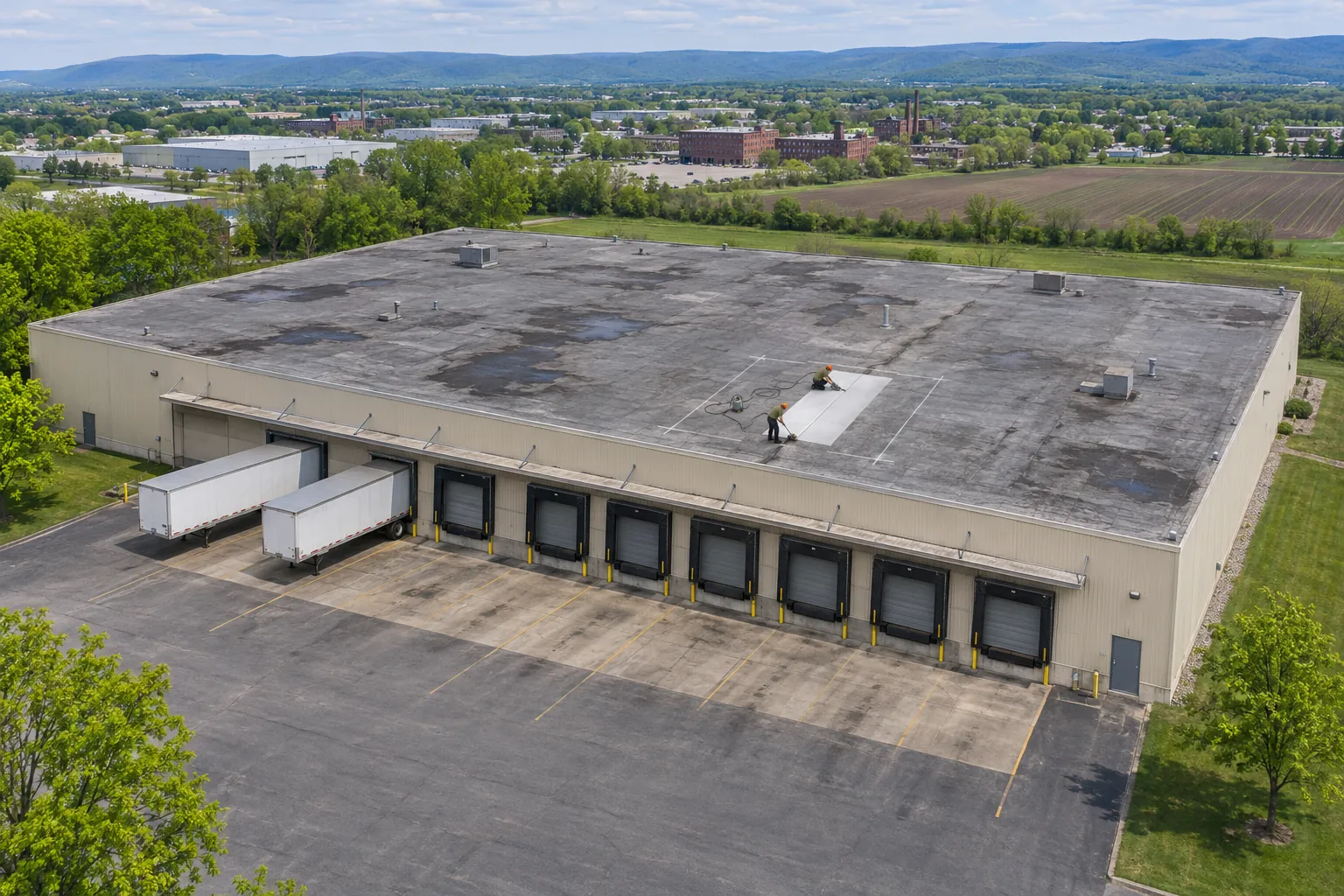
We handle Mechanicsburg commercial roof repair for office and professional buildings, with most calls starting at a split in the roof edge flashing.
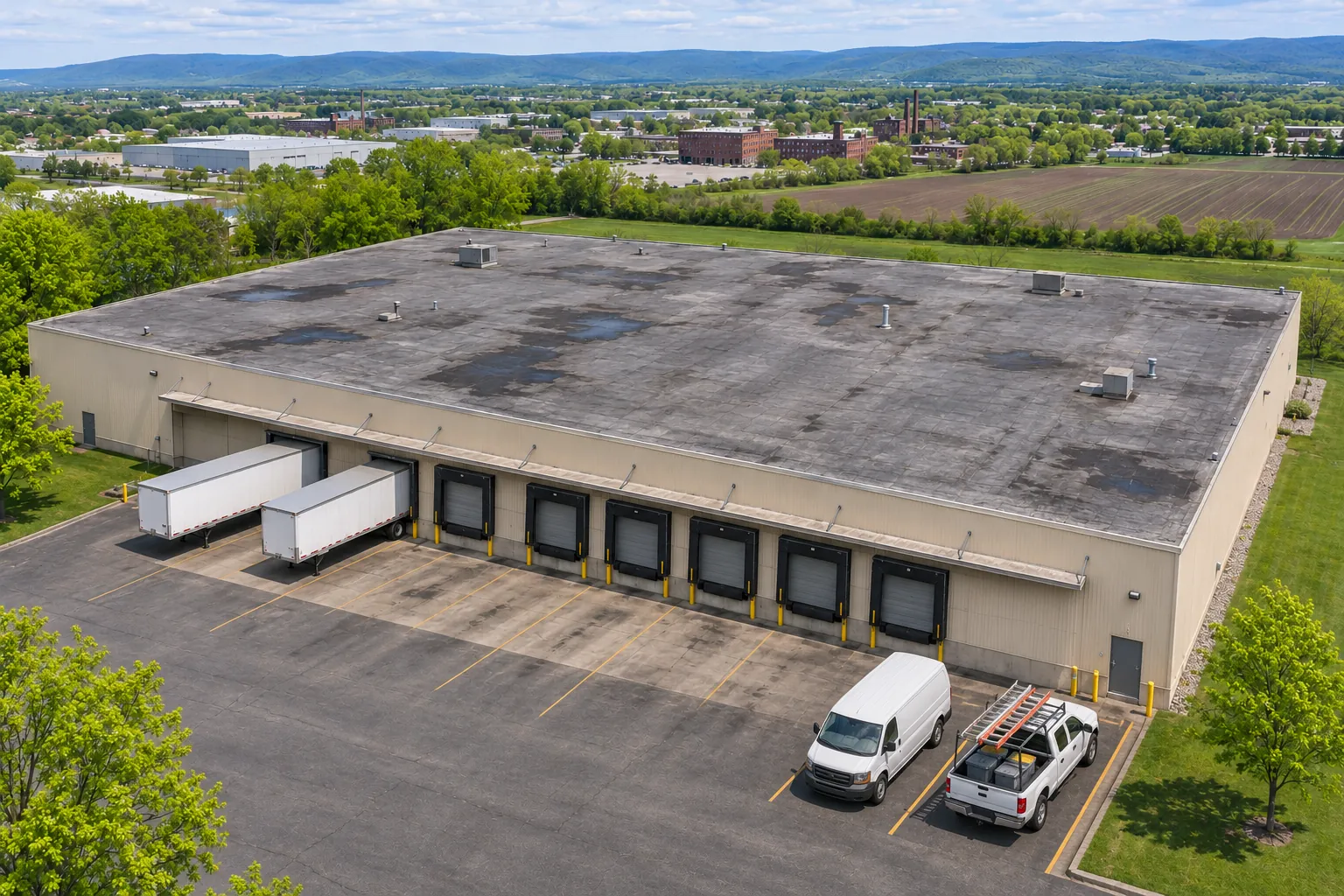
Mechanicsburg commercial roof repair on office buildings often comes down to how far an edge problem runs along the perimeter.
A single split in edge metal or perimeter flashing can be repaired locally when the membrane and edge on both sides still hold tight. We inspect past the visible split until we reach a firm stopping point.
Where fasteners have let go or the edge metal is loose for a longer run, a wider repair is the honest call. Tying new flashing to an unstable edge only moves the next leak a few feet down the wall.
Office roofs show edge and flashing trouble before the field fails. Here is what each sign tells you.
Loose gravel stop or drip edge that rattles in a storm has lost its fasteners, and the flashing below it follows.
Ceiling stains that run parallel to an exterior wall usually trace back to the perimeter flashing above.
Bubbles in built-up or modified roofing close to the edge crack under foot traffic and freeze-thaw swings.
Gaps between coping sections let water into the top of a parapet wall, where it runs down behind the flashing.
A drip in an occupied office or equipment room needs a temporary seal at the edge right away.
Fixing the perimeter properly protects the parts of an office building tenants notice first.
Refastened edge metal holds the membrane down, so storms stop peeling it back from the roof edge.
Stopping water at the flashing keeps it out of drywall, window heads, and ceiling tiles along the exterior.
Edge work runs early or late in the day, planned around office hours and parking.
Photos show exactly where the repair ended and why, so a future edge job starts from known roofing.
Each repair type below shows where it fits on Mechanicsburg office and commercial roofs.
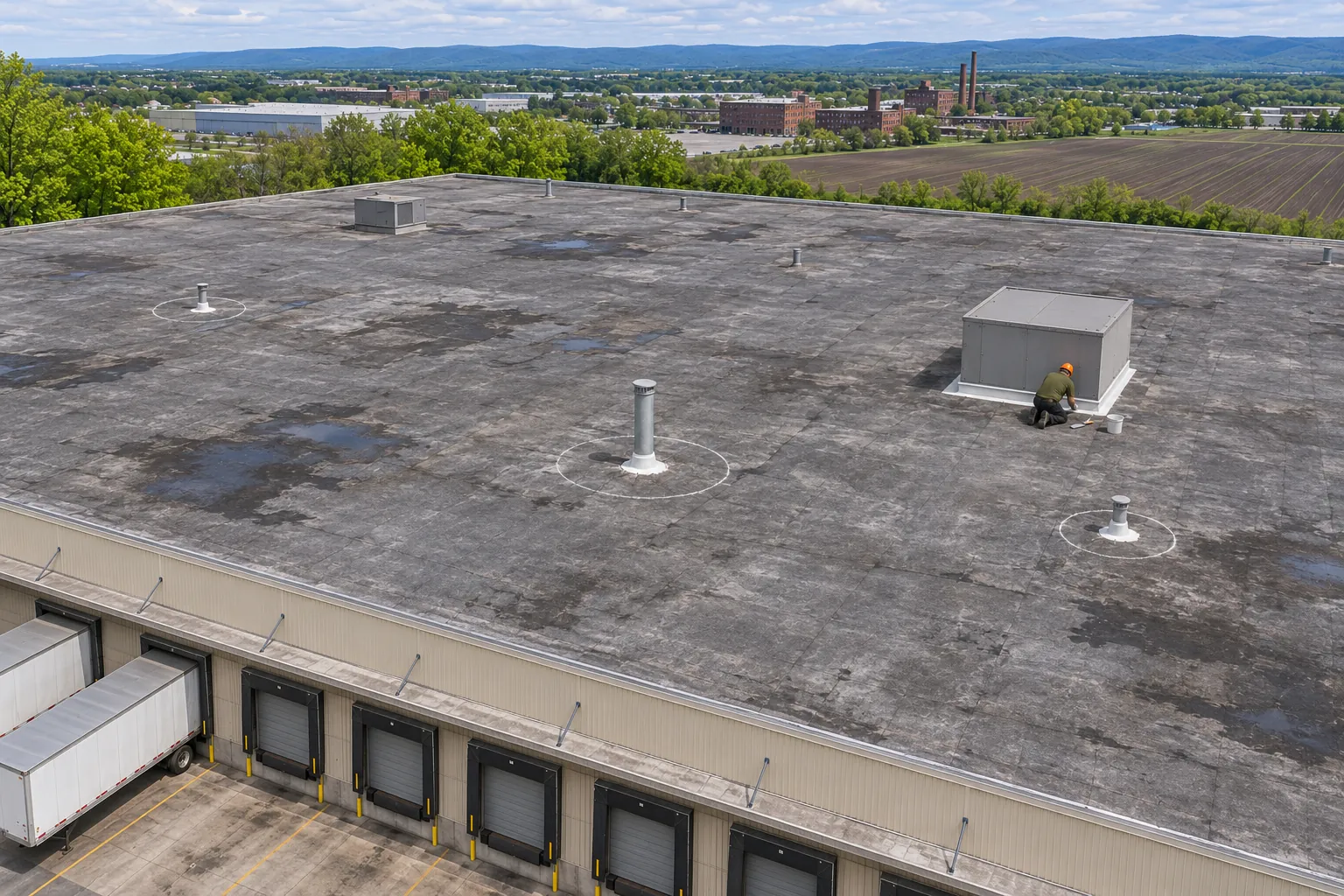
Low-slope office roofs with blisters, lifted laps, and drains, patched onto firm membrane well inside the perimeter.
Metal-roofed service buildings and canopies with leaking screws and laps where they meet the office wall.
Stains along outside walls get traced through edge flashing, coping, and window heads before repair.
Light industrial and flex buildings with rooftop equipment, repaired around tenants and their operations.
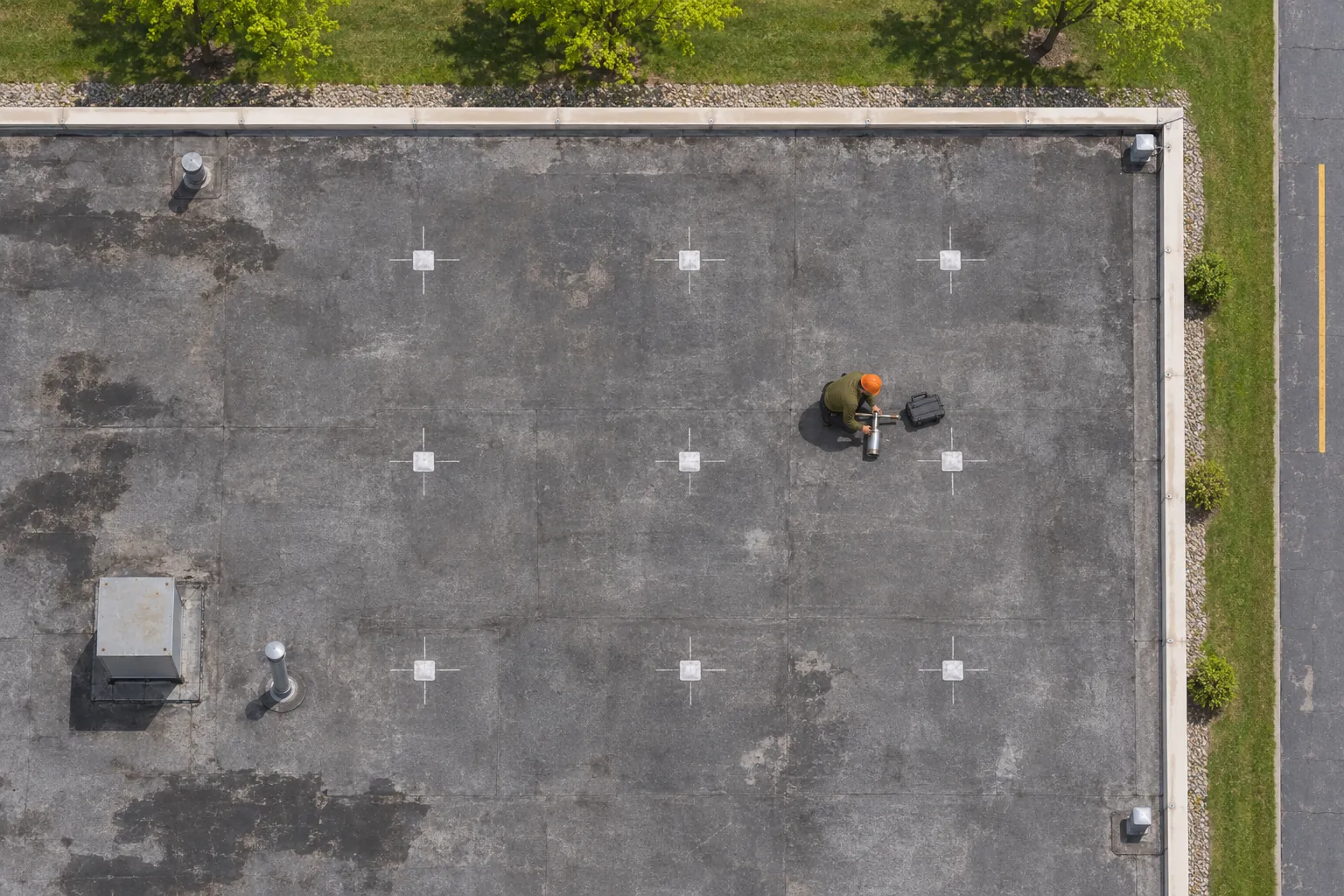
Send the address and where the stains appear inside. We check the edge on both sides of the split and price the repair in writing.
Four steps find where an edge repair can stop and where it has to keep going.
We check edge metal, coping, and flashing around the whole roof, marking splits, loose fasteners, and open joints.
Probing and fastener pulls on each side of the damage show where the perimeter still holds tight.
New flashing and edge metal are fastened and sealed from firm edge to firm edge, with membrane tied in behind.
The repaired edge and nearby wall joints are tested, and photos mark where the repair begins and ends.
Offices and warehouses in these towns are on our list too. For anything else, call us or send us a message if your building sits between these towns.
Home base: office roofs, brick blocks, and logistics warehouses.
Warehouse roofs where moved racks shift the leak report.
Drains leaking on warehouse roofs after nearby work.
Open offices and shops with clear leak reports.
Older roofs with unused curbs to remove and close.
Answers about edges, blisters, and repairs on occupied office buildings.
Yes, when the edge metal and membrane on both sides of the split still hold. We inspect beyond the visible damage to find a firm stopping point. If loose fasteners or worn material keep going along the perimeter, a broader repair replaces a new detail tied to an unstable edge.
Water entering at the edge flashing or coping runs down inside the wall line and shows on ceilings near windows. We check the flashing, coping joints, and wall above before touching the field of the roof.
Each blister is cut open, dried, and covered with a reinforced patch that reaches firm membrane on every side. A roof with blisters across the whole field points to trapped moisture, which core cuts confirm before any patching.
Intact blisters away from foot traffic go on a watch list. Ones near the edge, at walkways, or already cracked get repaired, because a split blister lets water straight into the insulation.
Around tenants. Noisy work and material lifts are set for early mornings or weekends, and the building manager gets the plan before anyone goes up. Interior access is arranged with the responsible staff.
The building manager first, with the location and time of the drip. Photos help. The manager then calls us with the roof access details, so one report reaches the roof instead of several.
Send the address and where the edge leaks. We find a firm stopping point and price the repair in writing.