Detail Repair
- Damage
- One stack or curb
- Equipment
- Stays in place
- Below The Roof
- Covered or cleared
- Access
- Hatch or ladder
- Usual Fix
- Reflash and seal the detail
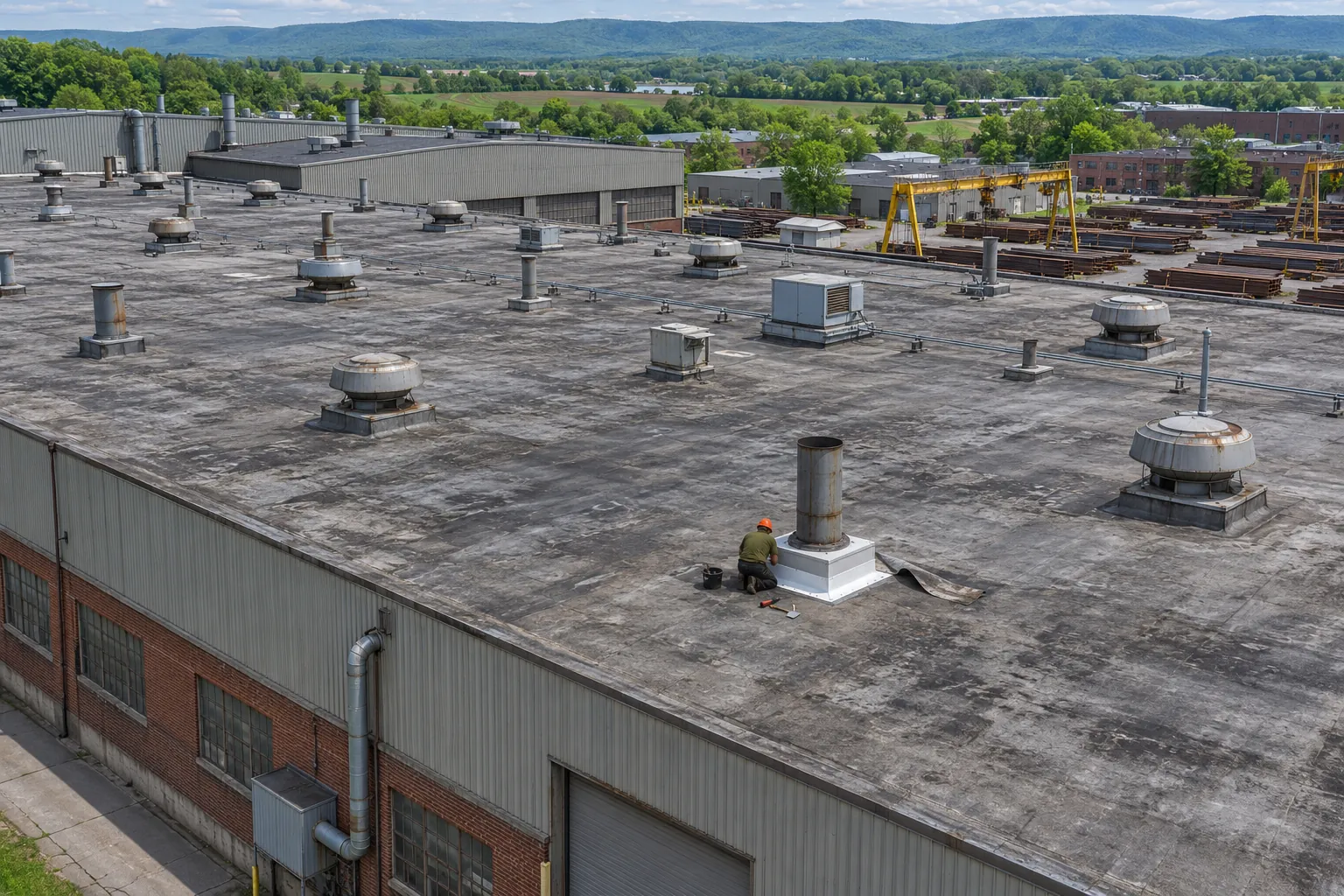
As a Harrisburg industrial roof repair contractor, we repair flashing at stacks, fans, and curbs and fix roofs over running production lines.
A Harrisburg industrial roof repair is sized by the damage and by the building below it. The columns compare three common scopes.
Plant roofs fail first where equipment passes through them. These conditions are worth reporting to maintenance right away.
Grease, chemical, or dust discharge settling on the membrane softens it and stops new flashing from bonding to it.
Heat and vibration from equipment crack the flashing at curbs, and water runs down inside the curb into the plant.
Debris and residue collect at drains beside fans, so water backs up around penetrations after storms.
Repeated foot traffic to equipment crushes insulation and splits the membrane along the same walking routes.
A drip over production, food storage, or electrical gear needs a temporary dry-in and coordinated access right away.
Each method answers a condition common on industrial roofs, where heat, discharge, and traffic wear the roof unevenly.
Residue is cleaned or the damaged membrane is cut out, the curb is reflashed with material suited to the discharge, and the fan source is flagged for maintenance.
The whole roof is walked beyond known wet spots, with seams, flashing, and drains photographed and logged before water reaches production.
Fans and units are shut down and locked out with plant staff, and roof access is set so repairs avoid shift changes and deliveries.
Pads along equipment routes spread foot traffic, so the membrane and insulation stop splitting where technicians walk.
Industrial repairs pay off most when they happen before water reaches the floor.
Repairing a curb on a scheduled weekend avoids an unplanned stop when the roof finally drips on a line.
Keeping water off food storage and finished goods protects inventory under the roof from contamination.
Clearing discharge and reflashing fans keeps residue from softening the roof membrane around them.
Logged roof findings help explain recurring leaks and plan repairs into the maintenance budget.
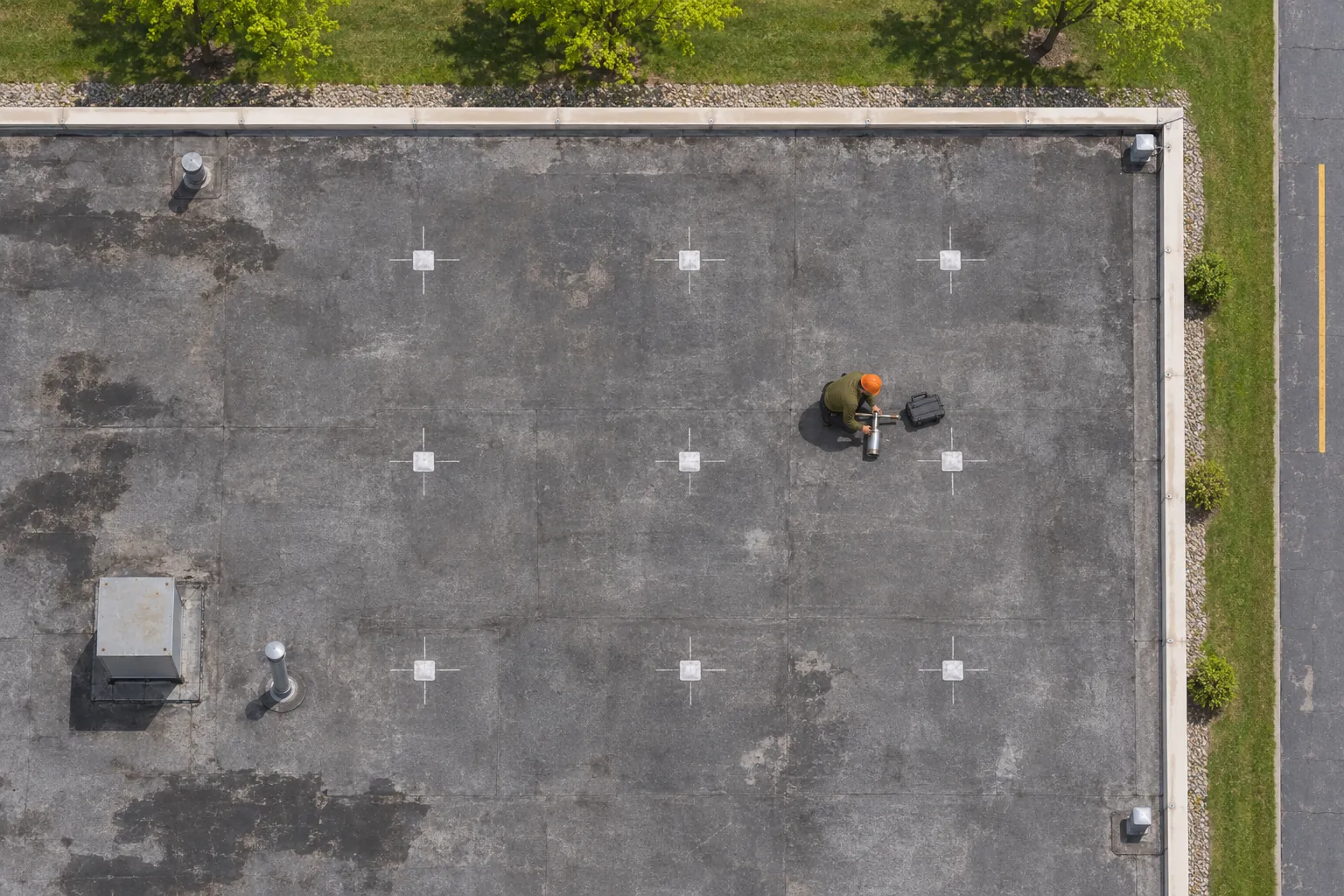
Send the building address and the equipment near the leak. We inspect the roof, plan access with your staff, and price the repair in writing.
Plant roof repairs follow four steps, so production and safety stay planned.
We read your logs for roof locations, weather, and nearby equipment work, then compare them with what the roof shows.
Seams, curbs, stacks, and drains are checked while the plant runs, so heat, vibration, and discharge show as they really are.
Equipment is shut down with your staff, damaged membrane and flashing are cut out, and the details are rebuilt.
Photos and notes go into your maintenance file, marking each repaired detail on a roof plan for the next inspection.
Plant buildings often combine roof systems, so these repairs come up alongside industrial work.
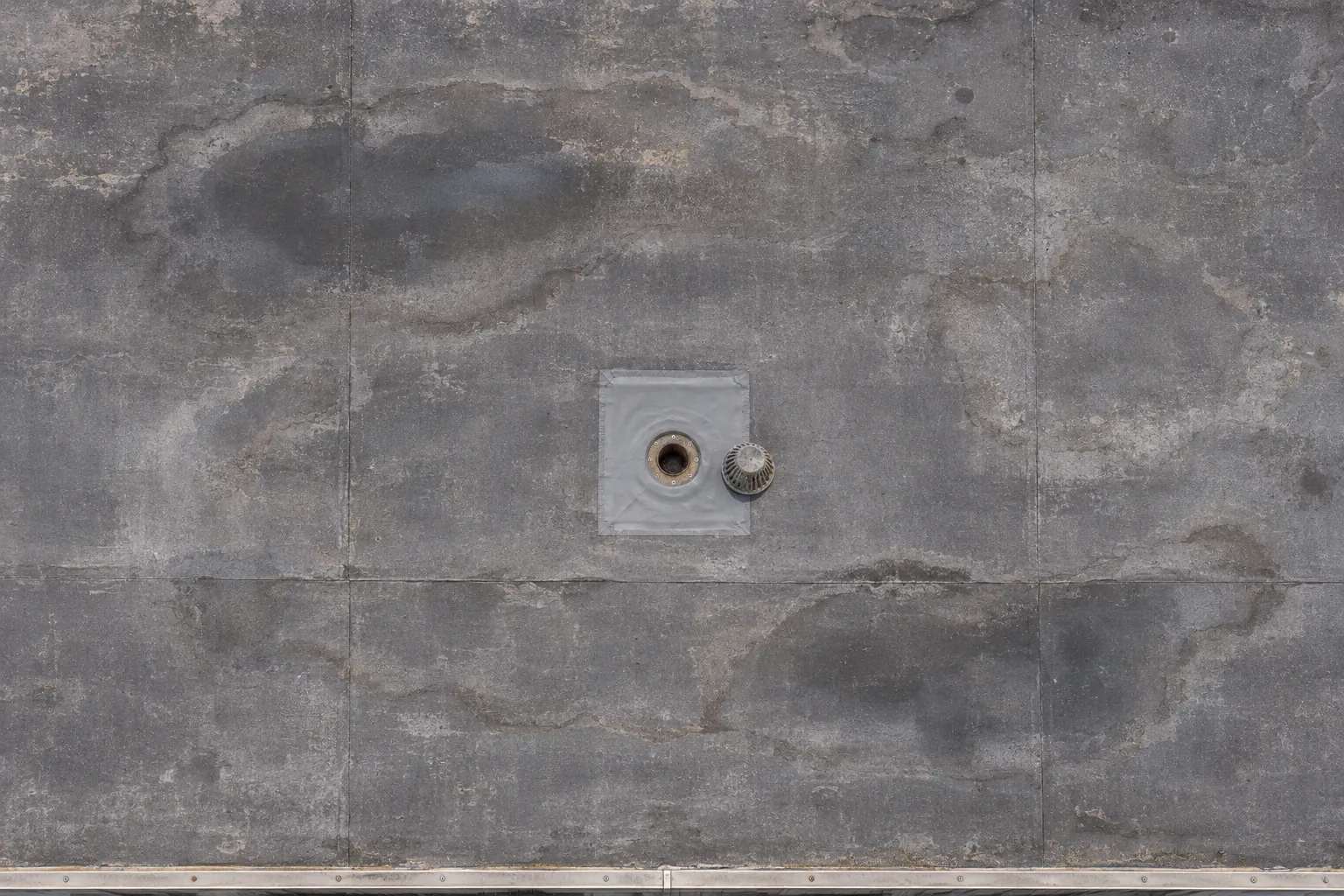
Office wings and warehouses attached to plants carry membrane roofs whose seams and drains need the same care.
Flat roof repair details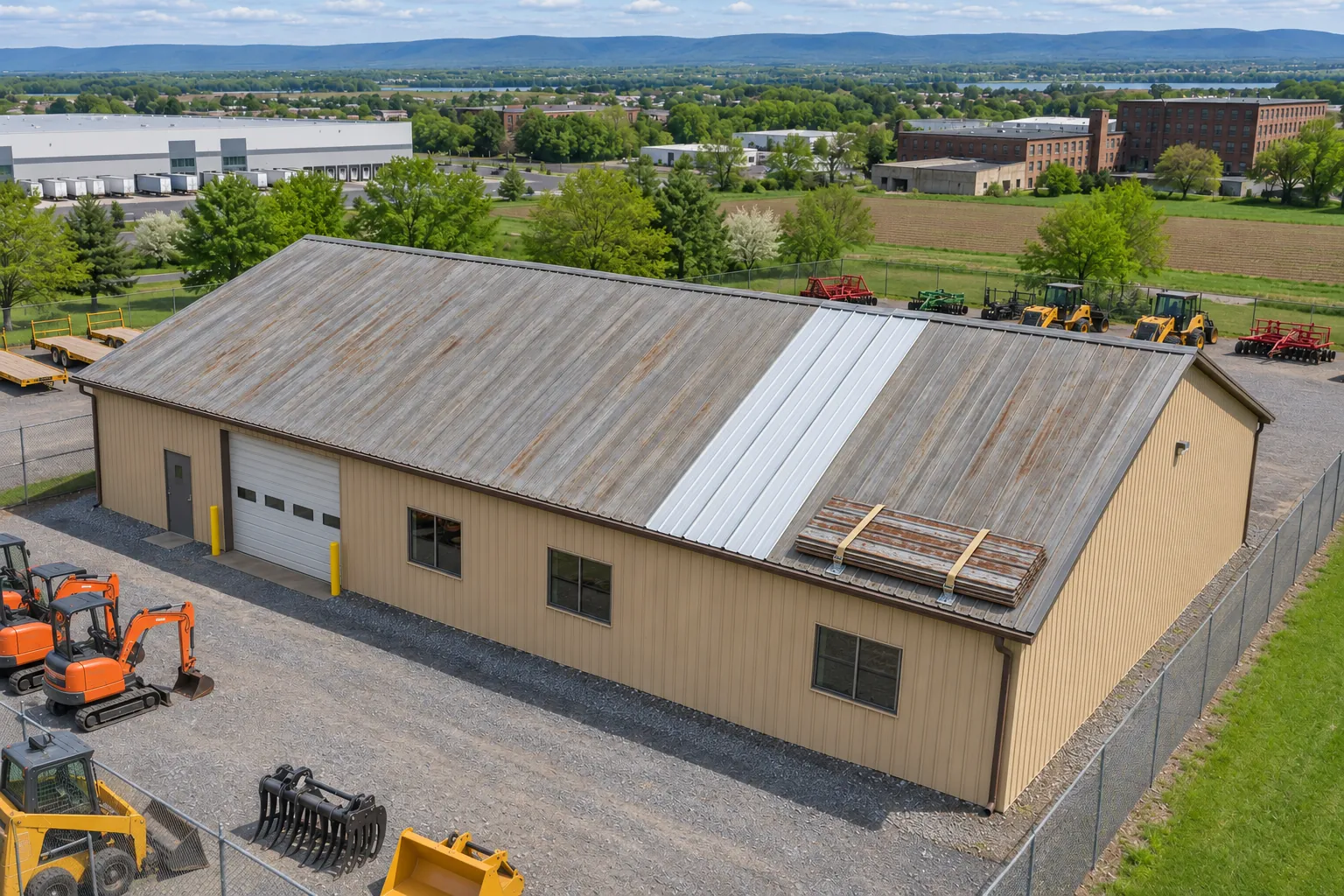
Metal process buildings and storage sheds on the same property leak at fasteners and laps.
Metal roof repair details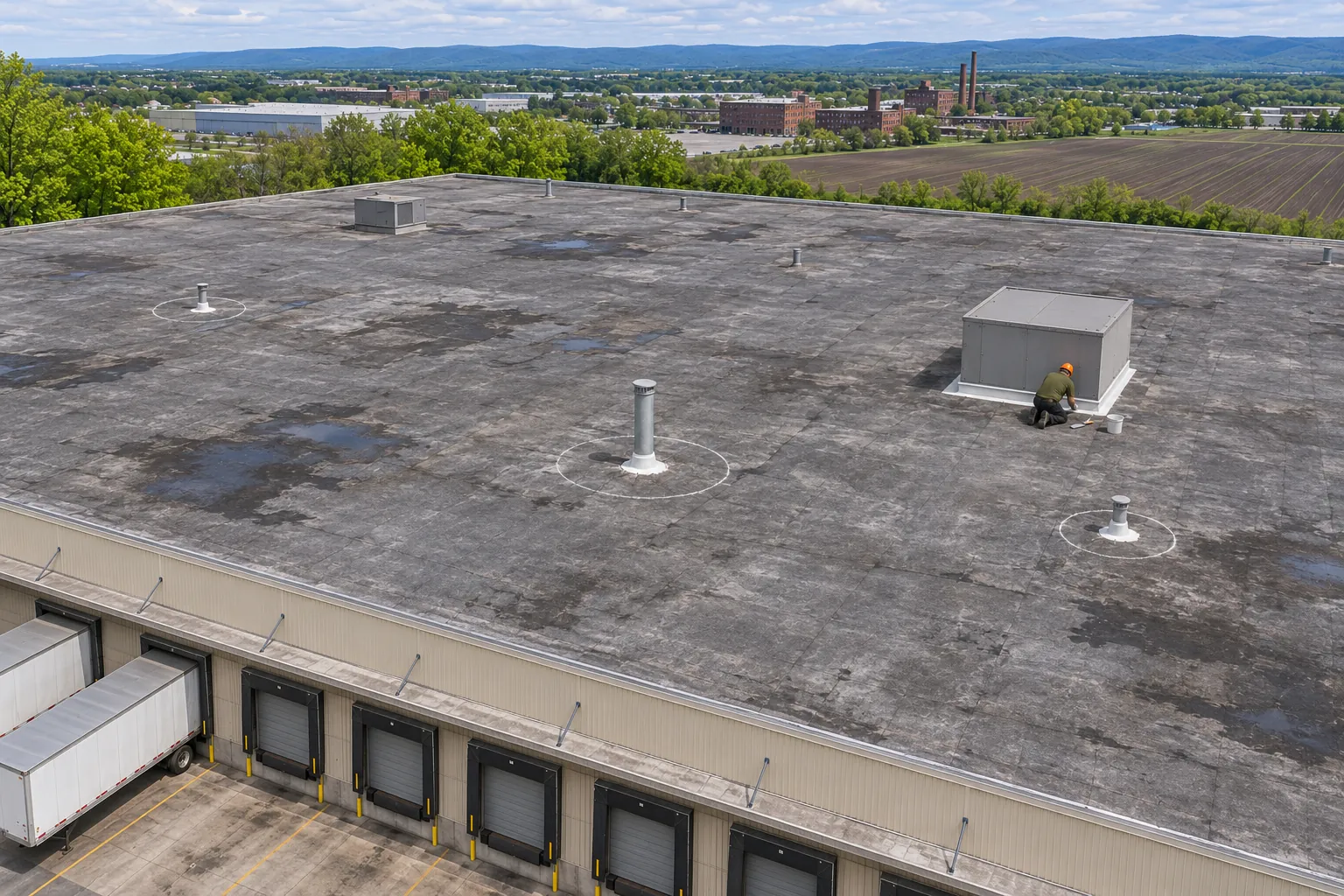
When a drip on the floor has no obvious source above it, leak tracing finds the path before any equipment is moved.
Leak repair detailsAnswers about exhaust deposits, maintenance, inspection, and cost on plant roofs.
Yes. Residue that softens the membrane or keeps new material from bonding has to be cleaned or cut out first. We inspect the area around the fan, decide between cleaning and replacement, and then rebuild the flashing. If the discharge keeps landing there, maintenance needs to address it too.
It does. Work above stored food needs interior protection, timed access, and debris control alongside the roof repair. The inspection sets the scope first, including whether a repair or a section rebuild fits, and the work above the storage area is then planned with your staff.
Notes that name roof locations, the weather when water appeared, and any work done nearby. We compare them with seams, equipment routes, and drains. A record of equipment changes or repeated patches often explains a recurring leak better than a list of dates. Bring whatever logs exist to the first visit, since even rough notes narrow the search.
Often, yes. Walking the roof beyond known wet spots finds cracked flashing, open seams, and slow drains before they drip on production. Some conditions stay hidden until material is opened, but a logged inspection gives the facility manager a wider view than waiting for the next leak.
An on-roof inspection sets it. Leak tracing, the roof system, damaged-area size, core cuts for wet insulation, flashing and drain work, equipment lockout, and access all change the price. Work above occupied storage or running lines adds protection time. The written estimate lists each item, so the price can be checked against the findings.
Many can. Roof work away from equipment goes ahead during production, while repairs at fans and stacks wait for a planned lockout. We stage the roof by zone so only the section being opened needs protection below. Material lifts stay clear of loading docks and air intakes.
Send the address and the equipment near the problem. We inspect the roof, plan access with your staff, and price the repair.