Warehouse Floors
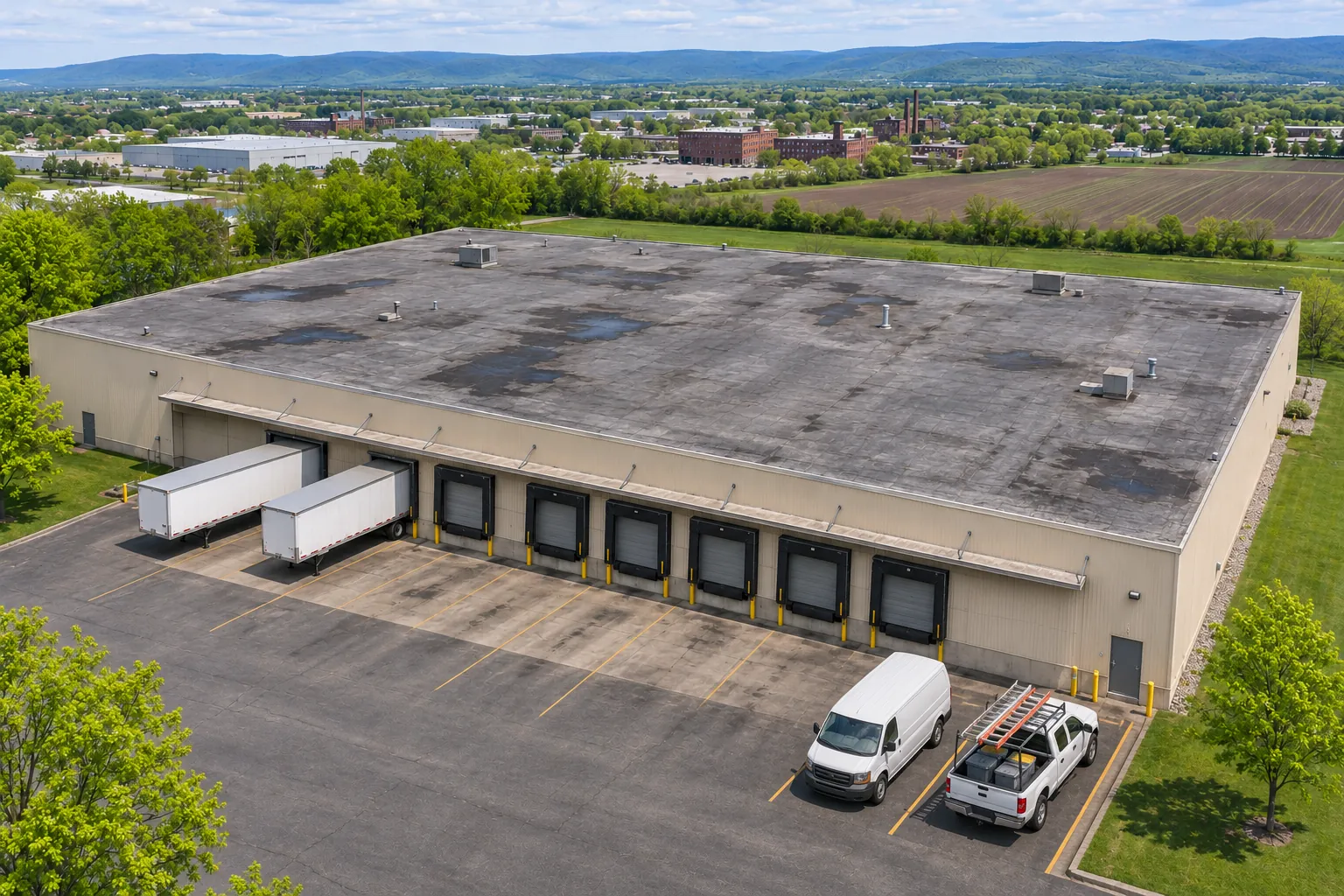
Large storage roofs need leaks matched to column lines, because racks and aisles below change over time.
We provide commercial roof repair near Harrisburg in five nearby towns, for warehouses, offices, shops, and plants with flat or metal roofs.
Looking for commercial roof repair near Harrisburg? We work across the towns below; for anywhere else, call us or send us a message.
Our home base covers capital-area office buildings, older brick commercial blocks with parapet walls, and the long membrane roofs of logistics warehouses, where one wet bay is mapped and repaired without disturbing the rest.
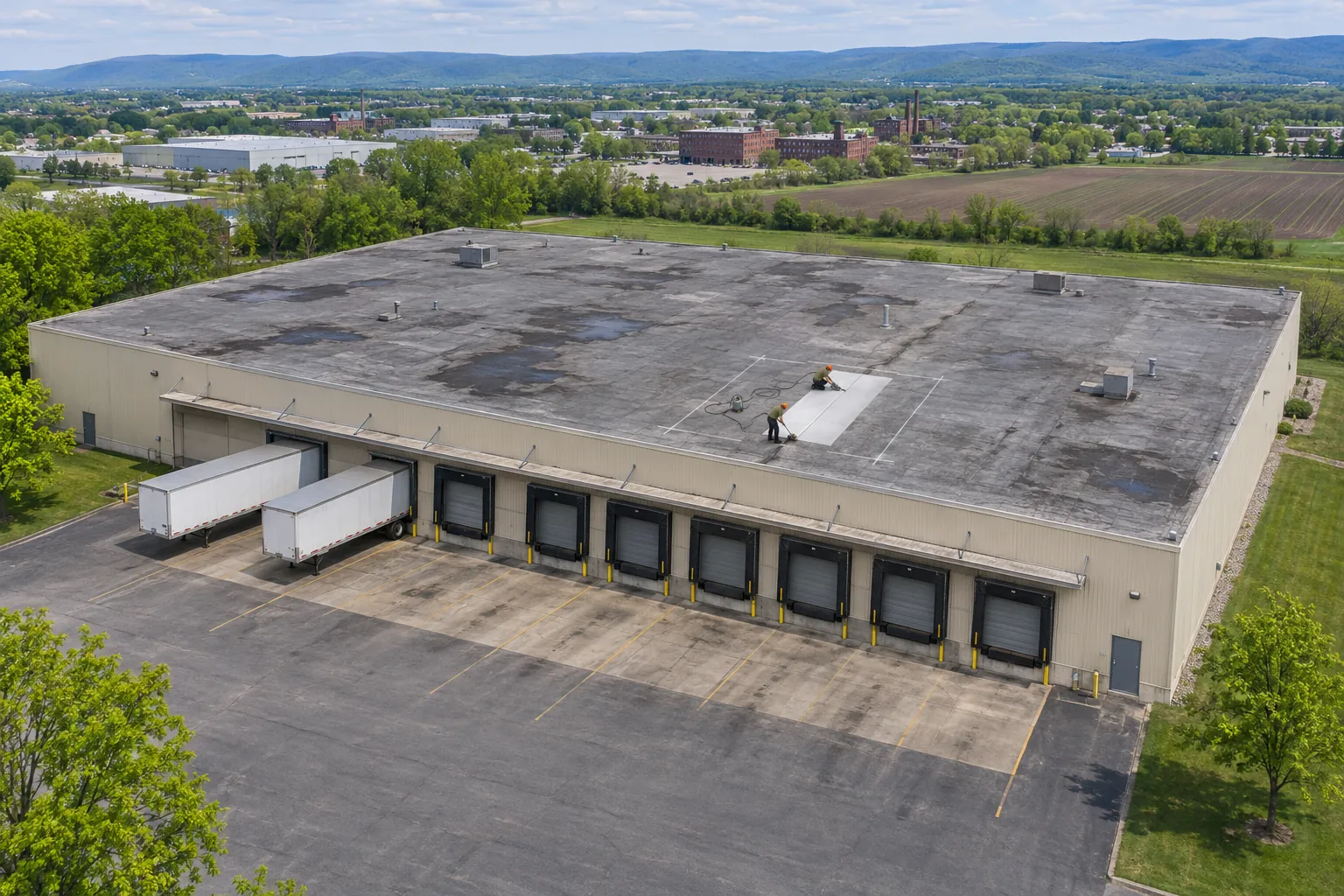
Large distribution and warehouse roofs, where relocated storage racks can move the spot staff notice water. We compare the current layout with earlier reports before choosing which seams, drains, and curbs to open.
Low-rise office and professional buildings, where a split in the perimeter flashing is often the whole leak. We check the edge metal and membrane beyond the split to find a firm stopping point for the repair.
Warehouse and light industrial roofs with interior drains. When a drain starts leaking after other trades worked nearby, the flashing, strainer, bowl, and pipe joint are each checked before anyone assigns a cause.
Offices, shops, and service businesses that stay open while the roof is repaired. Leak reports with photos and timing guide the visit, and interior access is set up with the staff responsible for the building.
Older commercial buildings with rooftop curbs left from equipment that is long gone. Removing one means rebuilding the deck, insulation, and covering across the opening, sized to the roof around it.
Send the address and a short note on the roof. If it sits near our area, we will tell you plainly whether we can inspect it.
The roof systems are similar across the area. What changes is the building type and the detail that leaks first.
Large storage roofs need leaks matched to column lines, because racks and aisles below change over time.
Low-rise offices leak at edge metal and coping, so repairs are bounded by where the edge still holds.
Warehouses with interior drains need the flashing, strainer, and pipe joint checked as one detail.
Shops and offices that stay open need interior access set up with staff before ceilings under the roof are touched.
Older roofs carry unused curbs that can be removed and closed with matched deck and insulation.
Each borough or city has its own reviewing office, so deck and insulation work is checked locally.
Answers about coverage, travel, and how visits are booked.
Call or send a message with the address. Buildings close to the listed towns are often within reach, and we tell you plainly if a roof falls outside our area so you can line up someone closer.
Yes. Every roof gets the same tracing, core cuts where needed, and repairs tied into firm roofing. What changes is the building type and the local office that reviews deck or insulation work.
Send the address, the roof type if known, and where water appears. We call to set a time that fits deliveries, tenants, or production, and confirm how to reach the roof.
Yes. Owners with roofs in more than one town can group them, and each building gets its own findings and repair scope.
An interior hatch, an exterior ladder point, or a lift spot clear of traffic. Tell us what the building has, and any rules for contractors on the property, before the visit.
It helps. A short notice from the manager about roof work overhead keeps questions down, and any interior access is planned with the people responsible for those spaces.
Send the address and where water shows up. We confirm coverage and set an inspection time.