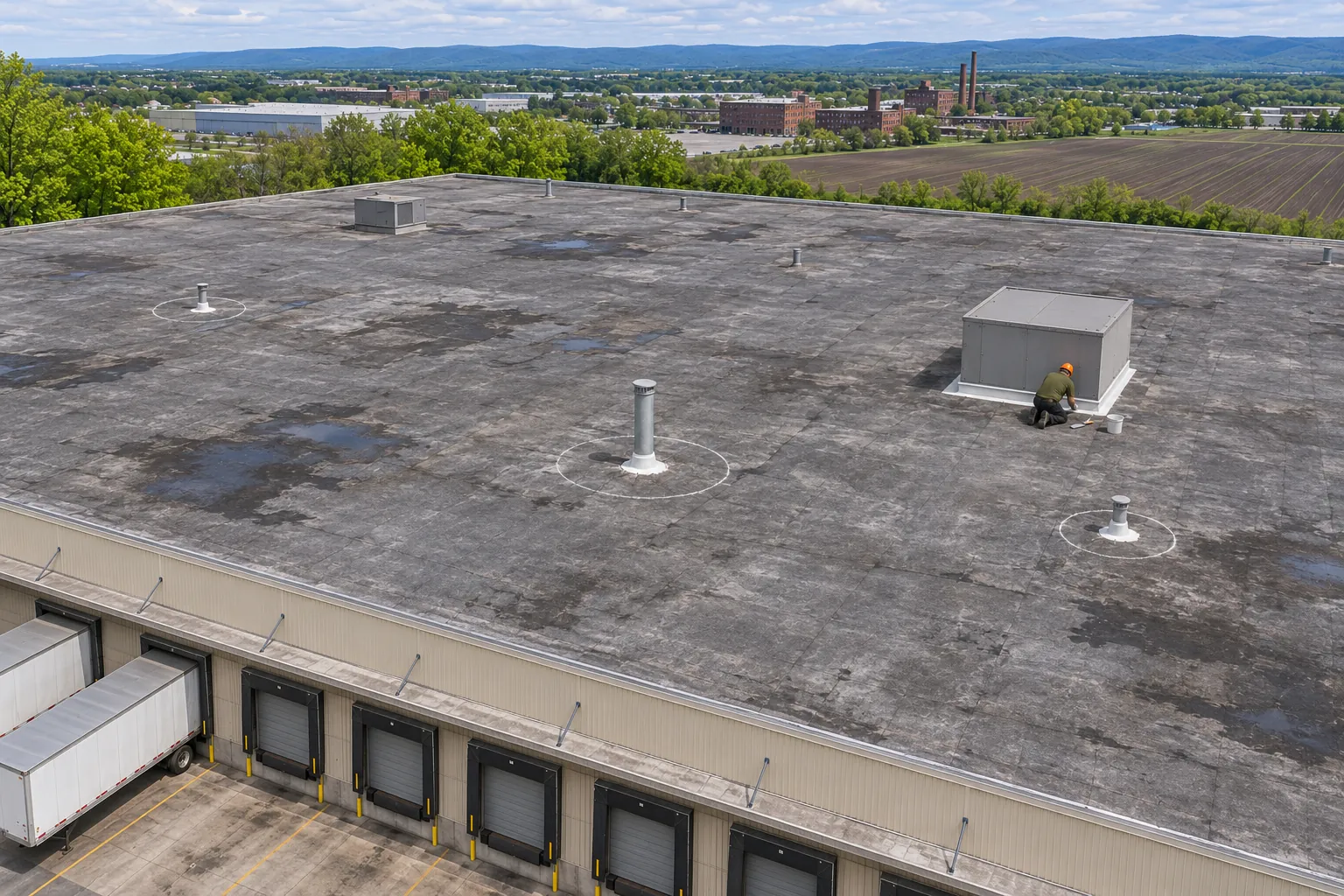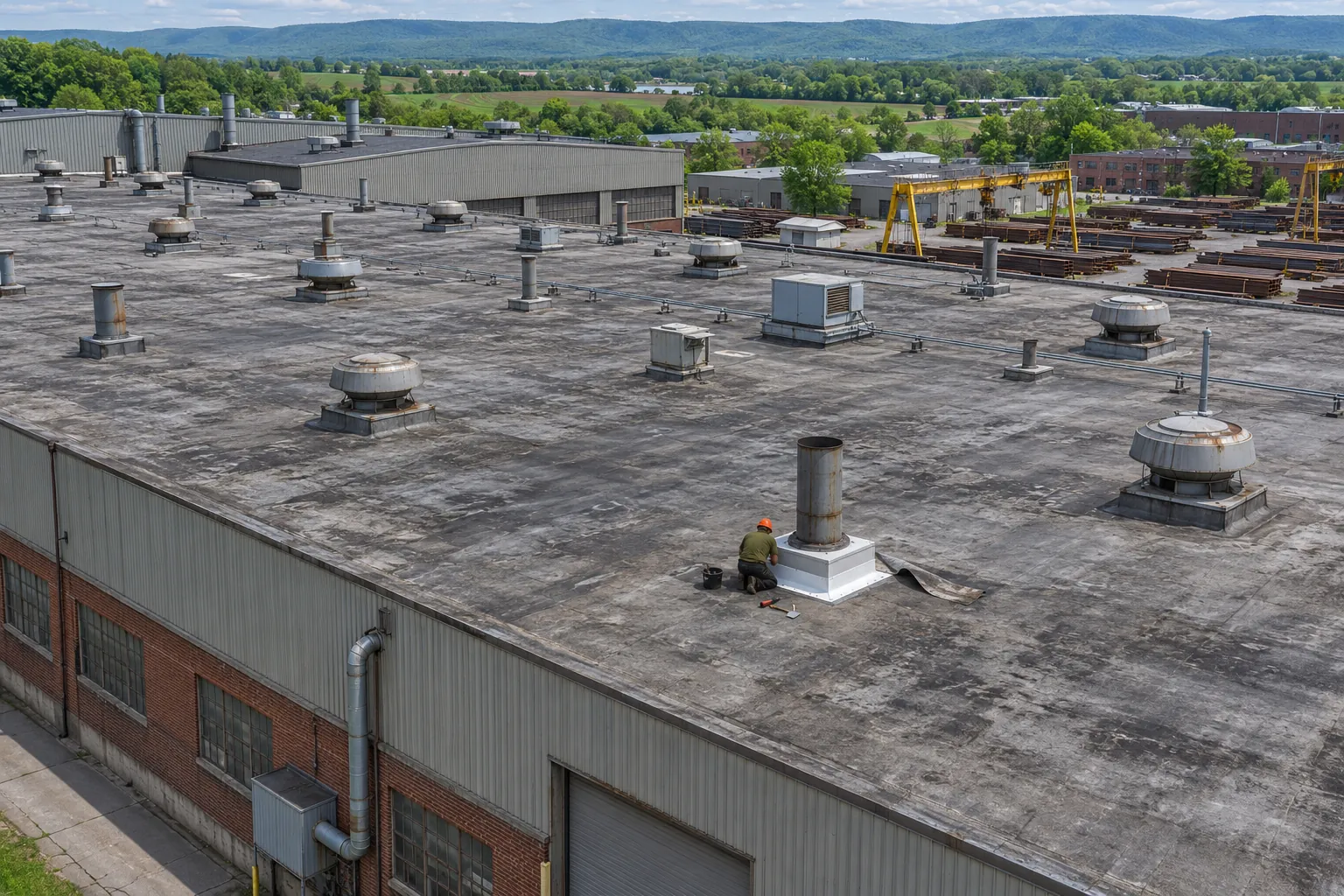
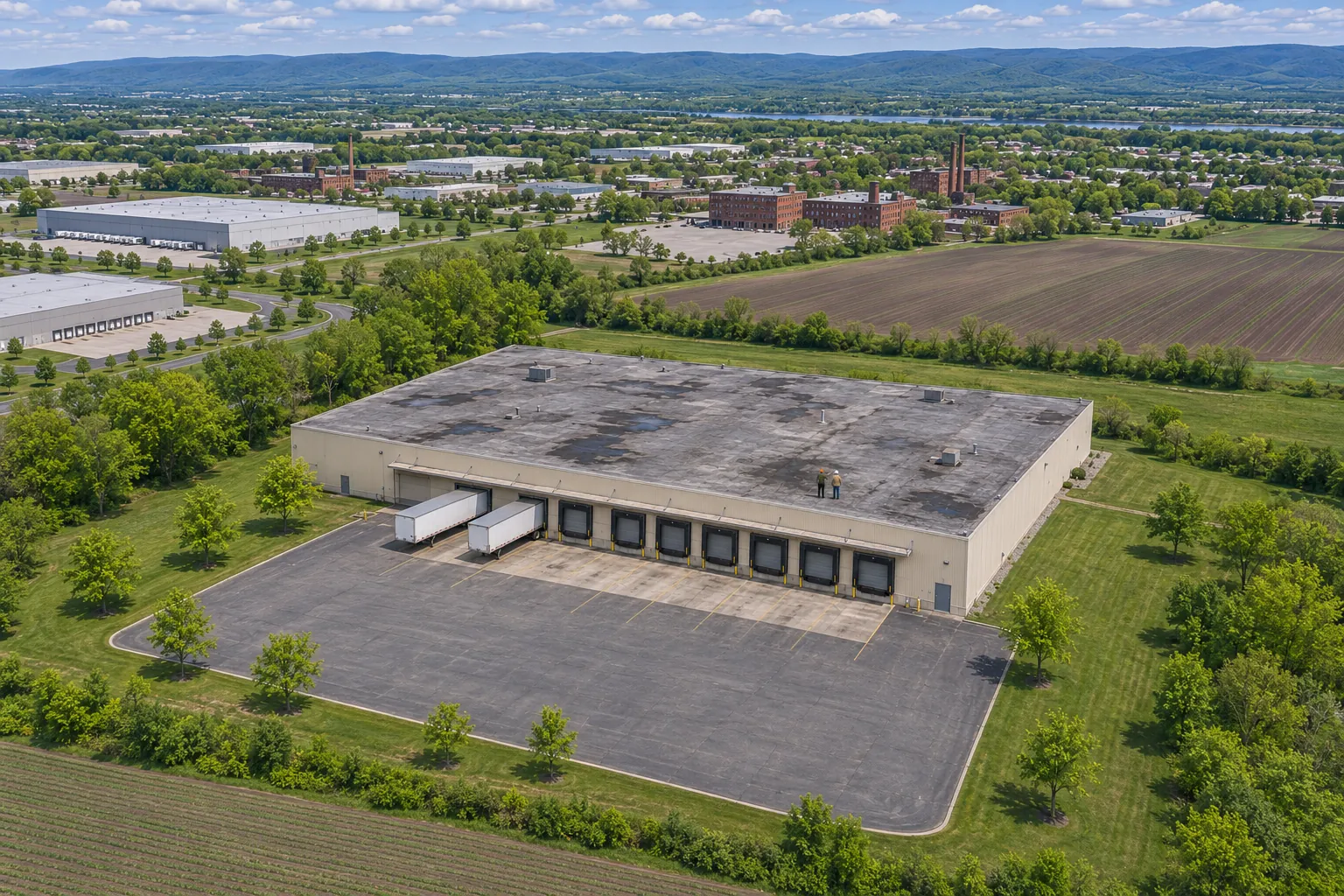
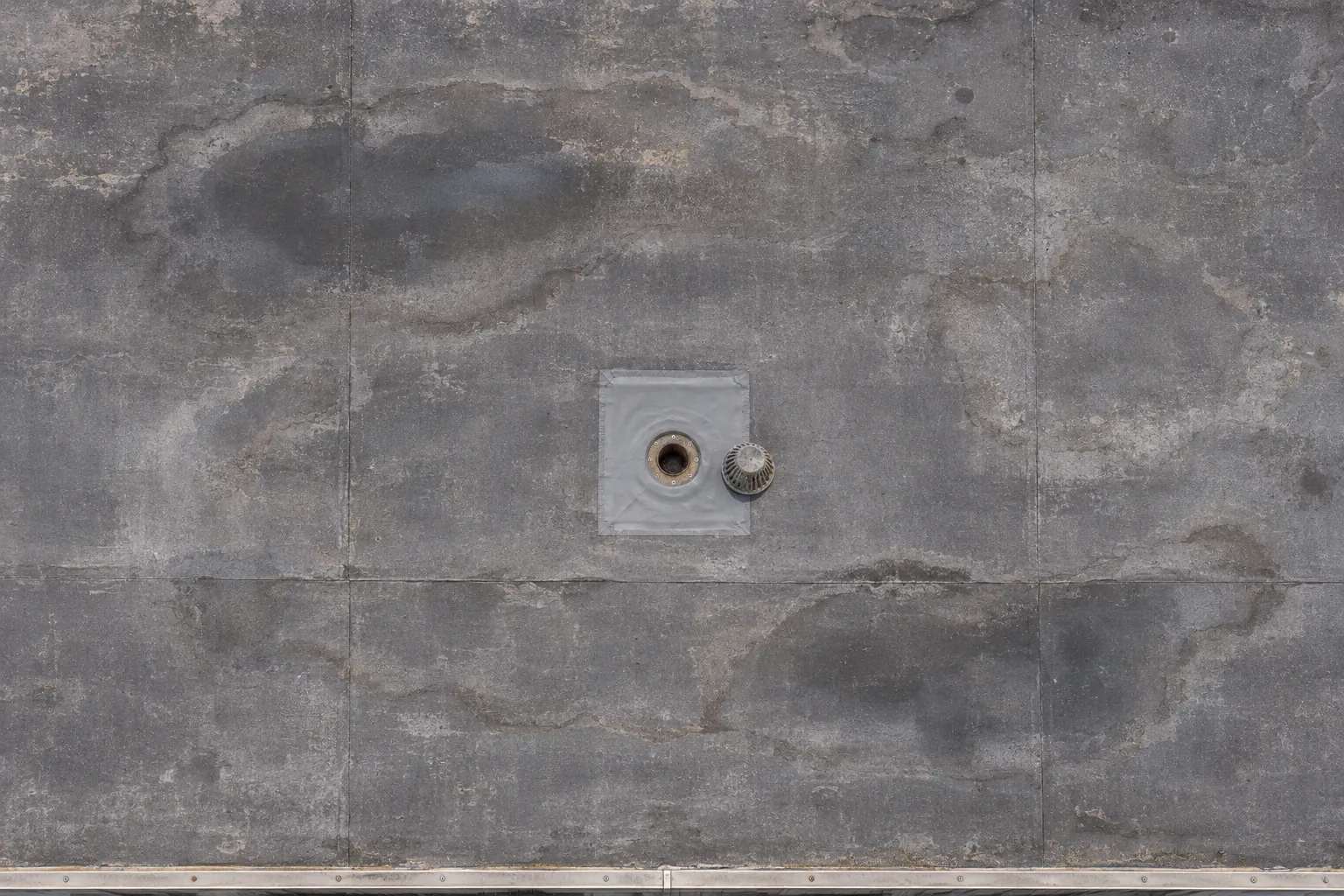
Warehouse membrane roofs with interior drains, where flashing, strainers, and wet board around the bowl are repaired together.
- Leaking drain bowls
- Debris-blocked strainers
- Wet board at outlets
We deliver Middletown commercial roof repair for warehouses and light industrial buildings, often starting at an interior drain that began leaking.

Middletown commercial roof repair calls often follow other work on the roof, when a drain that never leaked suddenly does.
Nearby roof or equipment work can disturb drain flashing, leave debris that blocks the strainer, or expose a defect that was already there. We check each of those without assuming the recent work caused the leak.
The drain is inspected from the clamping ring down to the pipe joint, and interior marks are compared with the roof findings. Responsibility is discussed only after the water path is clear.
Drain problems show up on the roof and inside the building at once. These are the ones to report.
Water at the drain line inside, with the membrane intact above, points to the bowl, clamp, or pipe joint.
A new puddle around a drain after nearby work usually means debris in the strainer or a disturbed flashing edge.
Ice in a drain bowl backs meltwater over seams, so a roof leaking after snow melt often starts at the outlet.
Hail can crack old strainers and bruise membrane near drains, where water then collects every storm.
A drain leak over stock or electrical gear needs a temporary fix while the drain is opened and inspected.
Drains carry the water from the whole roof, so a working outlet protects far more than the spot above it.
A clear strainer and tight clamping ring move rainwater into the pipe instead of under the membrane.
Replacing wet board around the bowl stops the slow spread that turns one leak into a soft area.
Photos of the flashing, strainer, and pipe joint give owners and other trades the same roof findings.
A working outlet drains meltwater before it backs up over seams during a winter thaw.
Each repair type below shows where it fits on Middletown warehouse and commercial roofs.
Warehouse membrane roofs with interior drains, where flashing, strainers, and wet board around the bowl are repaired together.
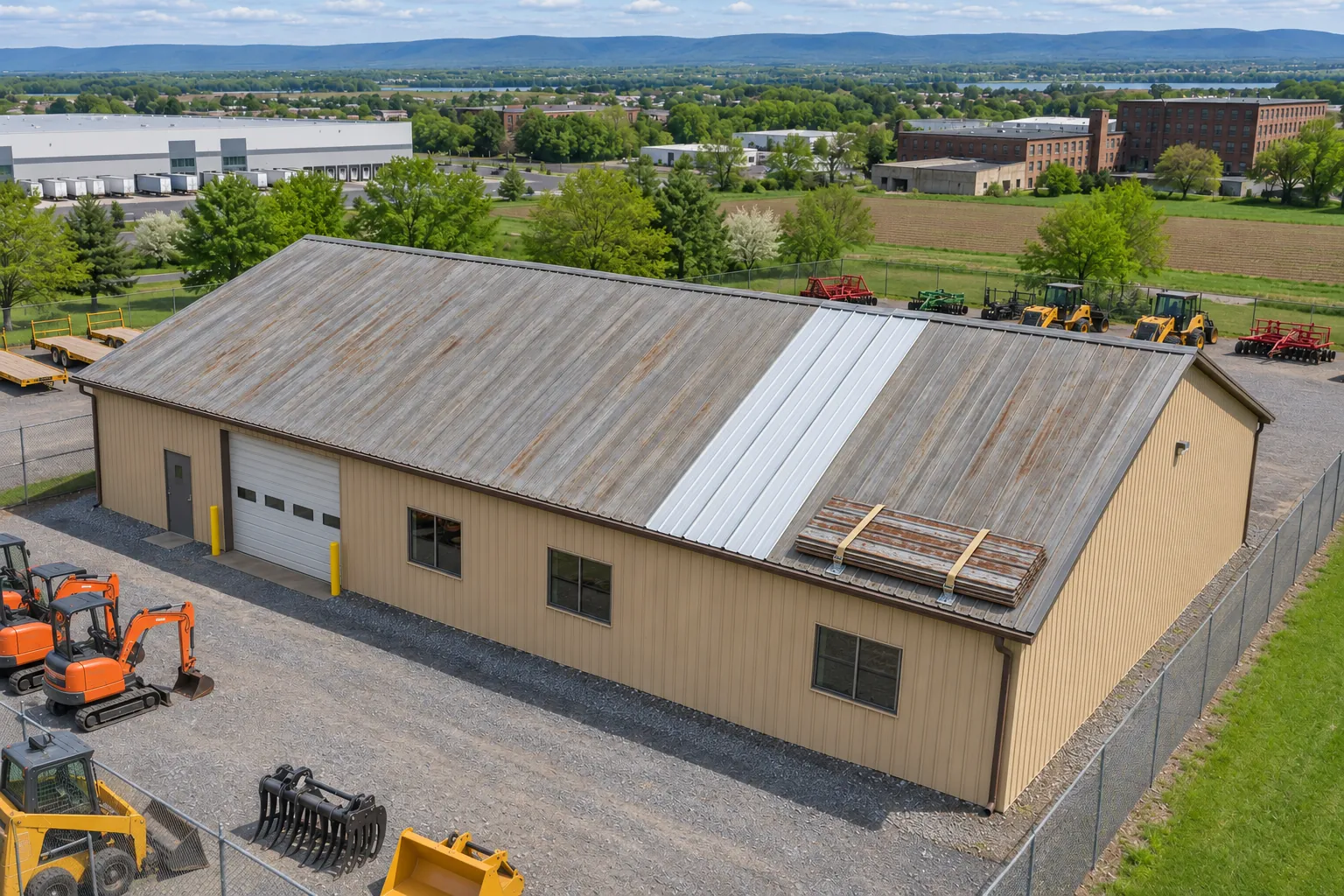
Metal storage and shop buildings with gutters and downspouts, where laps and fasteners at the eave leak first.
Leaks that start after other trades worked on the roof are traced through drains, curbs, and seams before blame.
Light industrial roofs with equipment near drains, repaired around production and residue from exhaust.

Send the address and what work was done nearby. We inspect the drain from flashing to pipe and price the repair in writing.
Four steps follow the water from the strainer down to the pipe joint.
We remove debris from the strainer and around the bowl, then check the flashing edge and clamping ring.
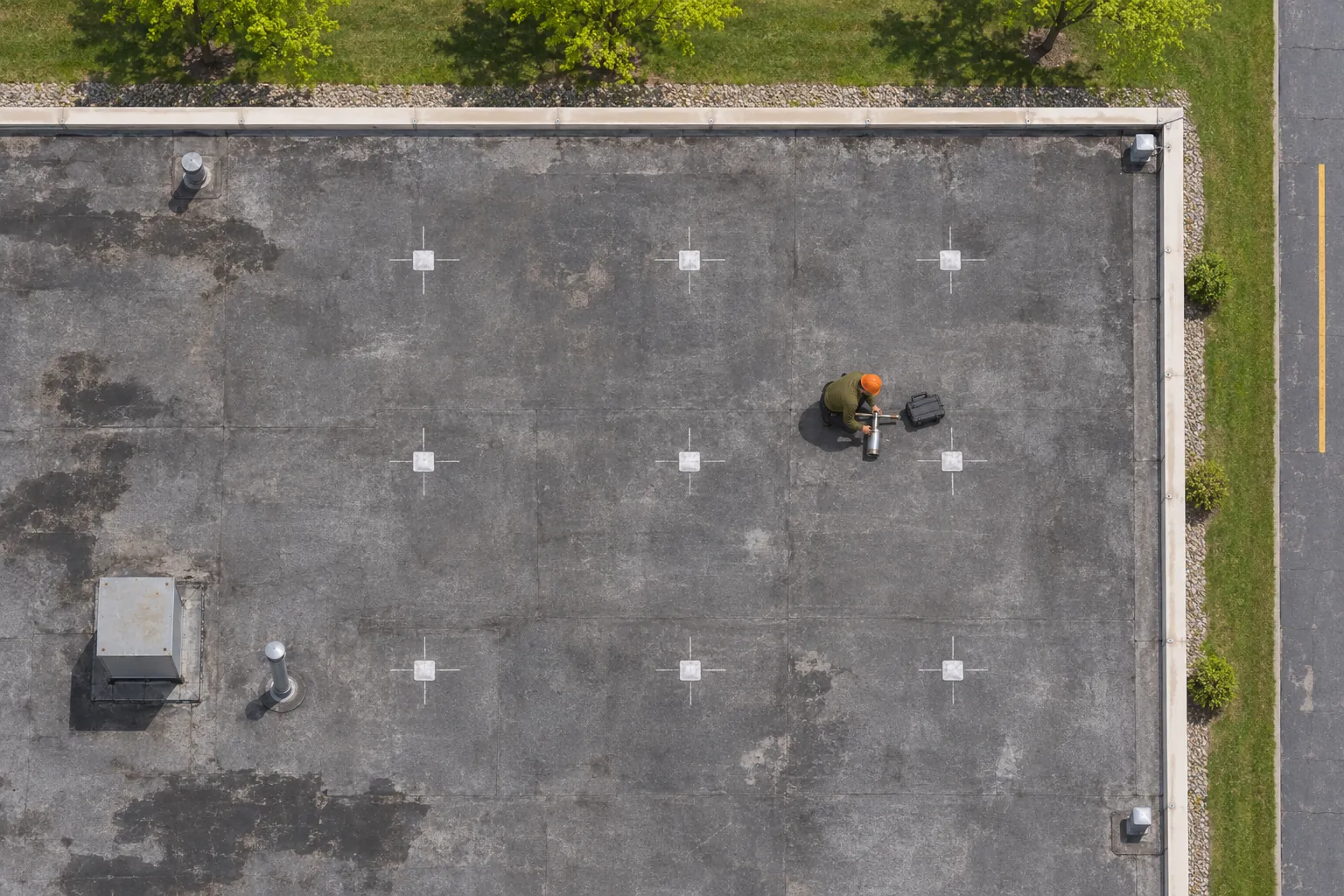
Core cuts near the drain show whether insulation is wet and how far moisture has spread.
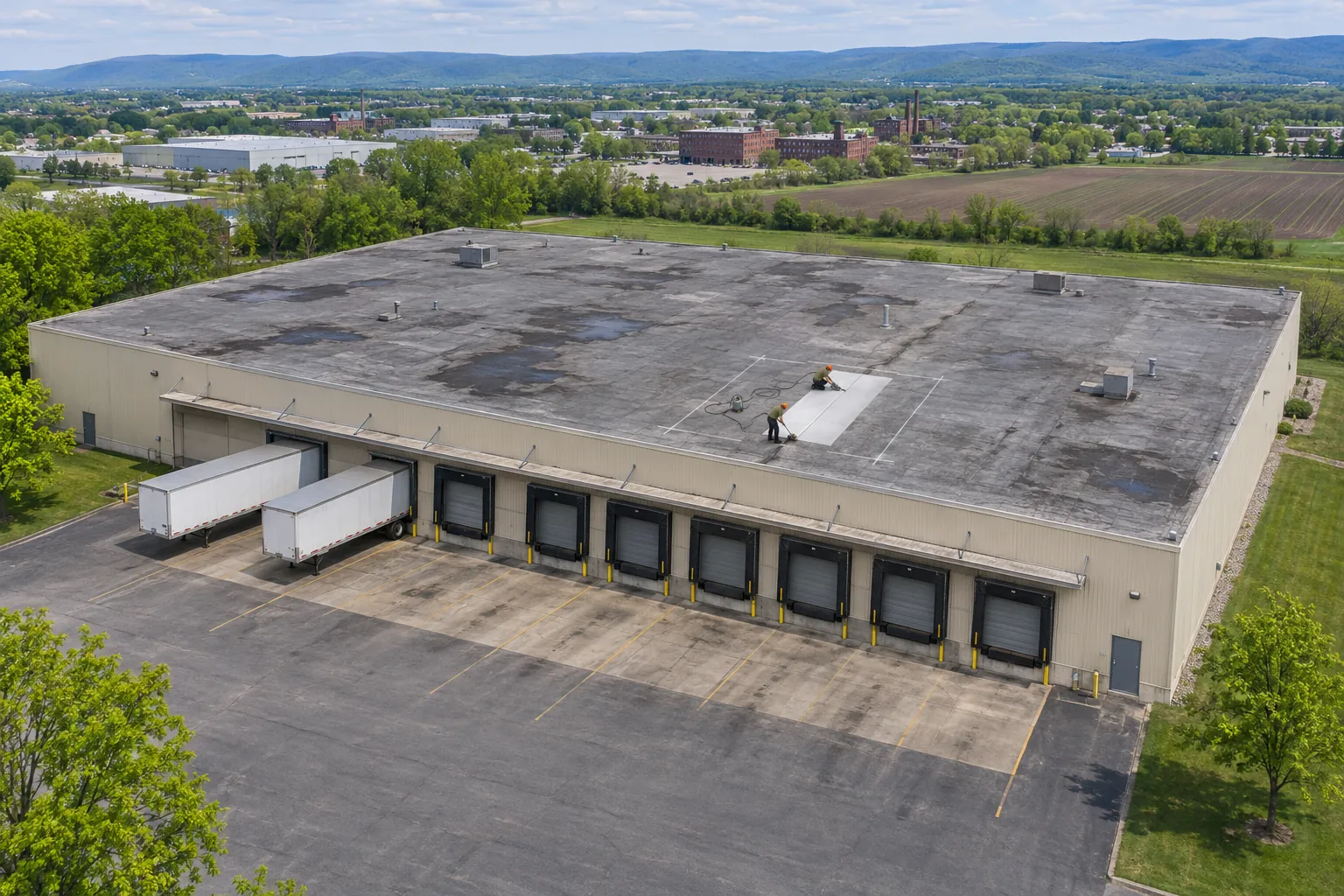
New target flashing, clamping hardware, or a drain insert goes in, with membrane tied to dry roofing.
Water is run through the drain, the joint below is checked, and photos go to the owner and other trades.
The towns below are covered from Middletown too. Outside them, call us or send us a message if your building sits between these towns.
Home base: office roofs, brick blocks, and logistics warehouses.
Warehouse roofs where moved racks shift the leak report.
Office roofs with split edge flashing and lifting coping.
Open offices and shops with clear leak reports.
Older roofs with unused curbs to remove and close.
Answers about drains, thaw leaks, and storm damage on warehouse roofs.
Flashing at the drain can be bumped loose, debris can block the strainer, or an older defect can finally show. We investigate each of those without assuming the recent work caused it, and the roof and interior findings set the water path before scope or responsibility comes up.
Clearing the strainer, checking the clamping ring and target flashing, testing the insulation around the bowl, and inspecting the pipe joint below. Some repairs need a plumber at the pipe while we rebuild the roof side.
Ice in the drain bowl holds meltwater on the roof, where it reaches seams rain never covers. Wet insulation also keeps dripping after the surface clears. Once the roof is safe to walk, we inspect the drain path and the seams around it.
Yes. A fall check that clears strainers and looks at drain flashing removes the most common cause of thaw leaks on warehouse roofs. Leaves, gravel, and packaging debris collect fastest at drains near trees, doors, and rooftop units.
We look for bruised membrane, cracked strainers, and dented metal, then core-cut where the surface looks damaged. Photos and notes separate hail marks from older wear, which helps when an insurance claim is involved.
Often. Damaged areas around drains and edges are repaired first, and the findings show whether the rest of the roof still sheds water or needs wider work. Each repaired area is photographed, so a claim file shows what was fixed and where.
Send the address and which drain is leaking. We trace it from the flashing to the pipe and price the repair.